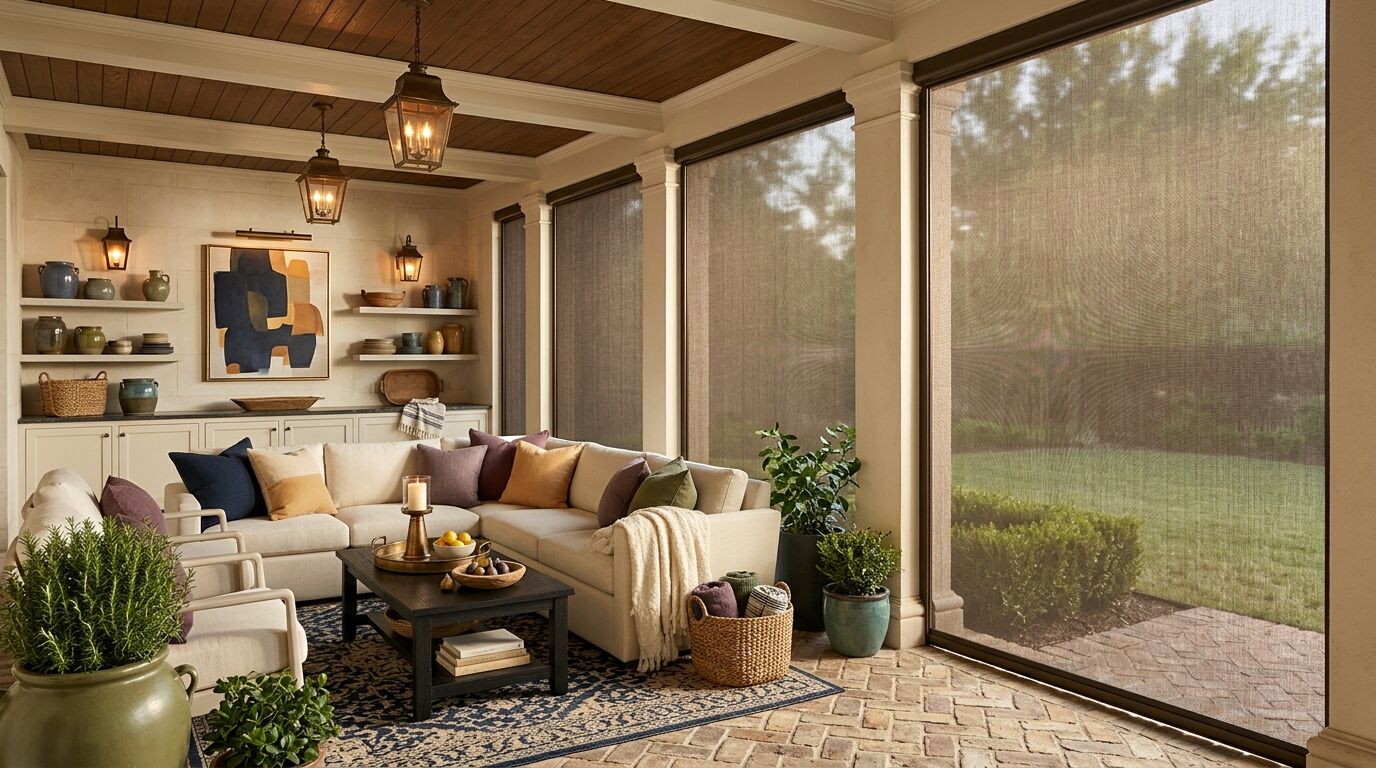
Turning a Covered Patio Into a Three-Season Room
Screens can buy back March through May and late September through November on a covered patio. Here is what they do for wind, dust, insects and heat, and the four things a screened patio will never be.
Read article →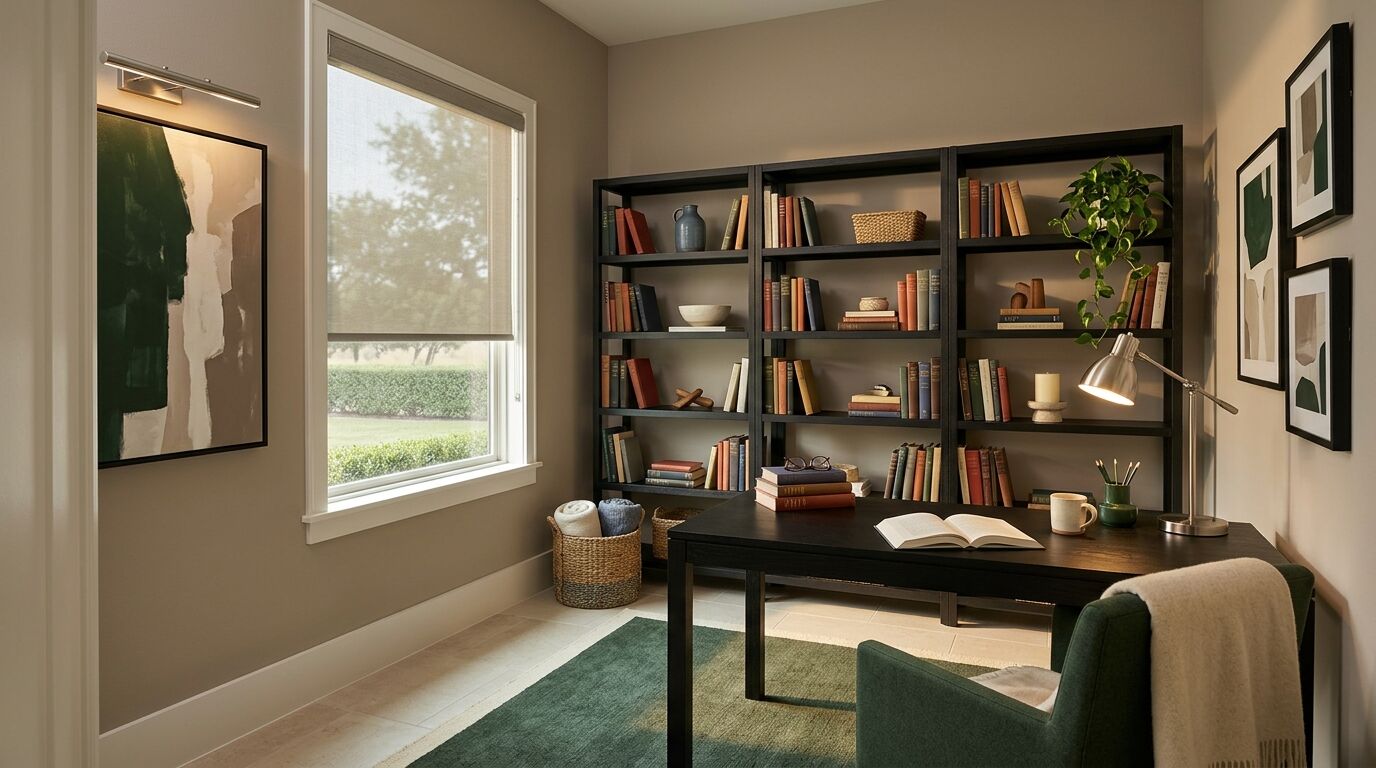
What Openness Factor Means On A Solar Shade
One number on the back of the sample decides how much glare you keep out and how much of the yard you keep. Here is what 1%, 3%, 5% and 10% actually do, and the one thing no openness factor can fix.
Read article →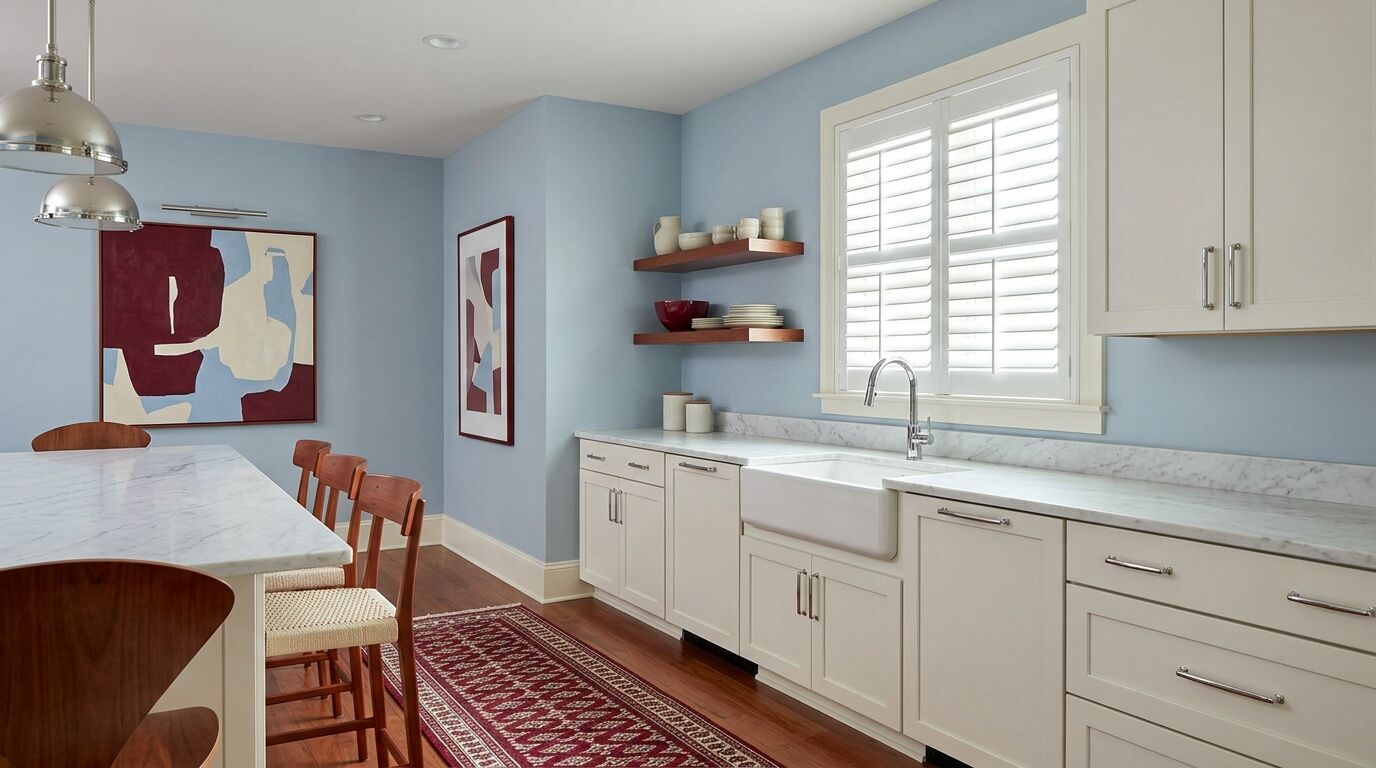
Windows Over a Kitchen Sink or Bathtub: What Actually Works There
Two small windows cause more callbacks than all the big ones put together. One sits behind a kitchen faucet. The other sits over a bathtub, past arm’s reach, in a room full of steam. Neither is decided by how it looks.
Read article →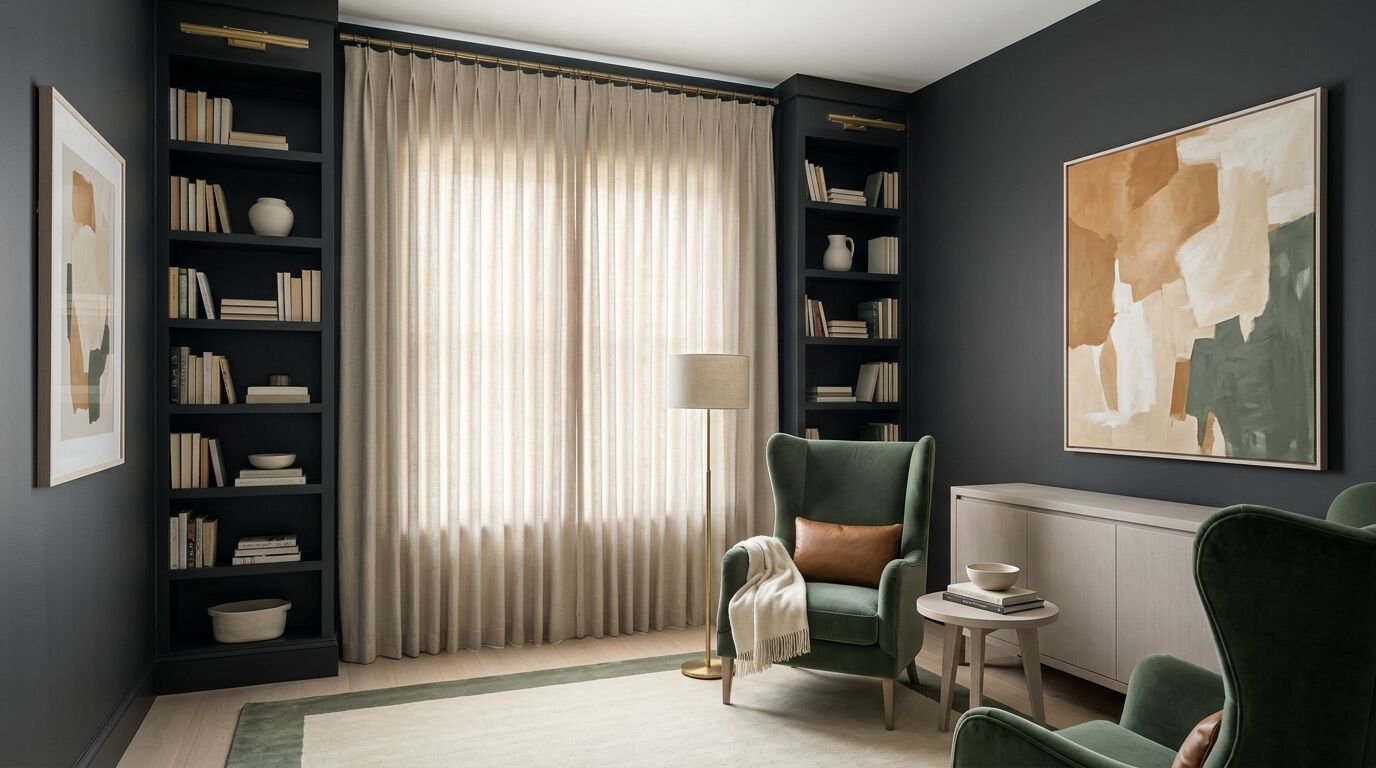
Drapery Lining: What Unlined, Blackout and Interlined Actually Change
Nobody shops for lining. They shop for the face fabric, then let the workroom pick what goes behind it. That choice decides how the panel folds, how dark the room goes, what the neighbors see and how long the fabric survives a west window. Here is what each option actually does.
Read article →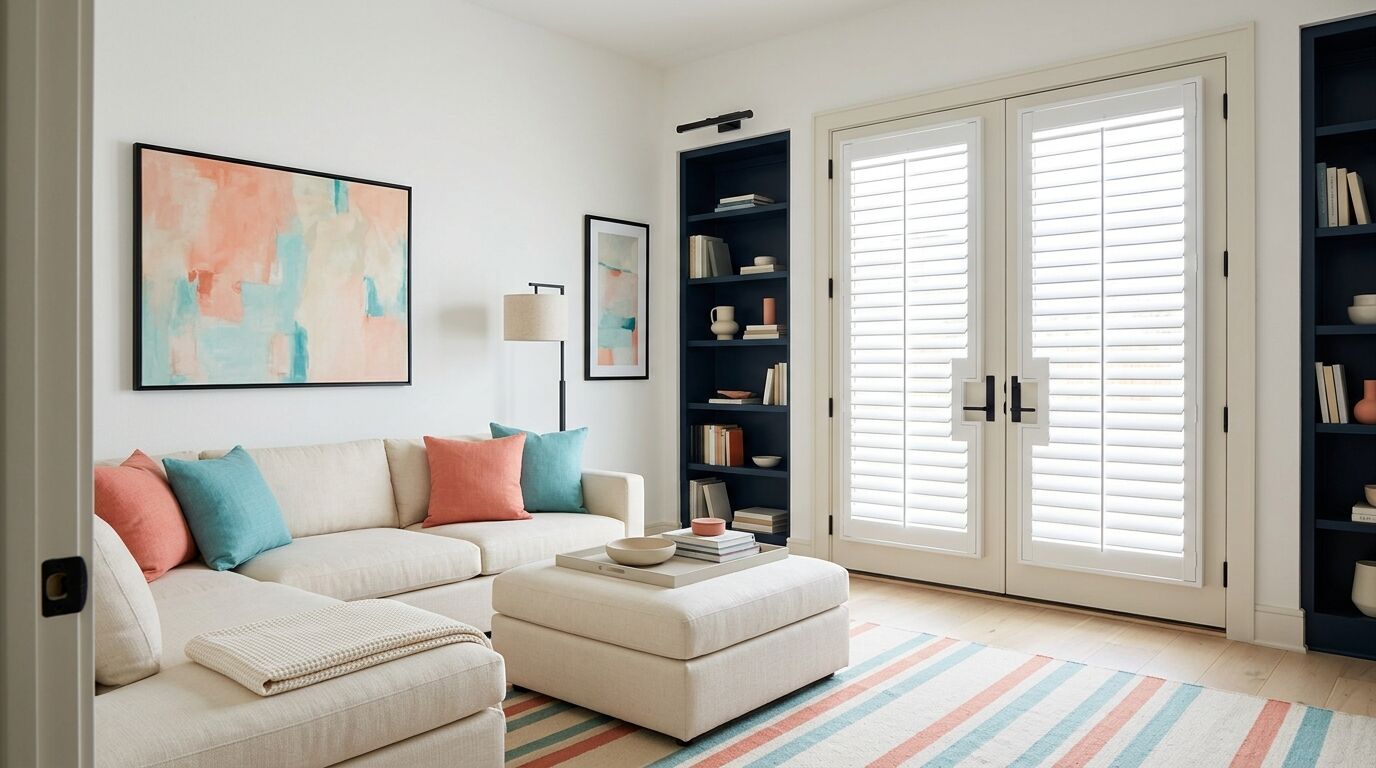
Shutters on French Doors and Sliders: What Actually Clears
A window sits still. A door does not, and that is the whole difficulty. Here is how shutter panels are built for French doors and sliders, what the handle cut-out really involves, how bypass and bifold differ on a slider, and what has to be checked before anything gets ordered.
Read article →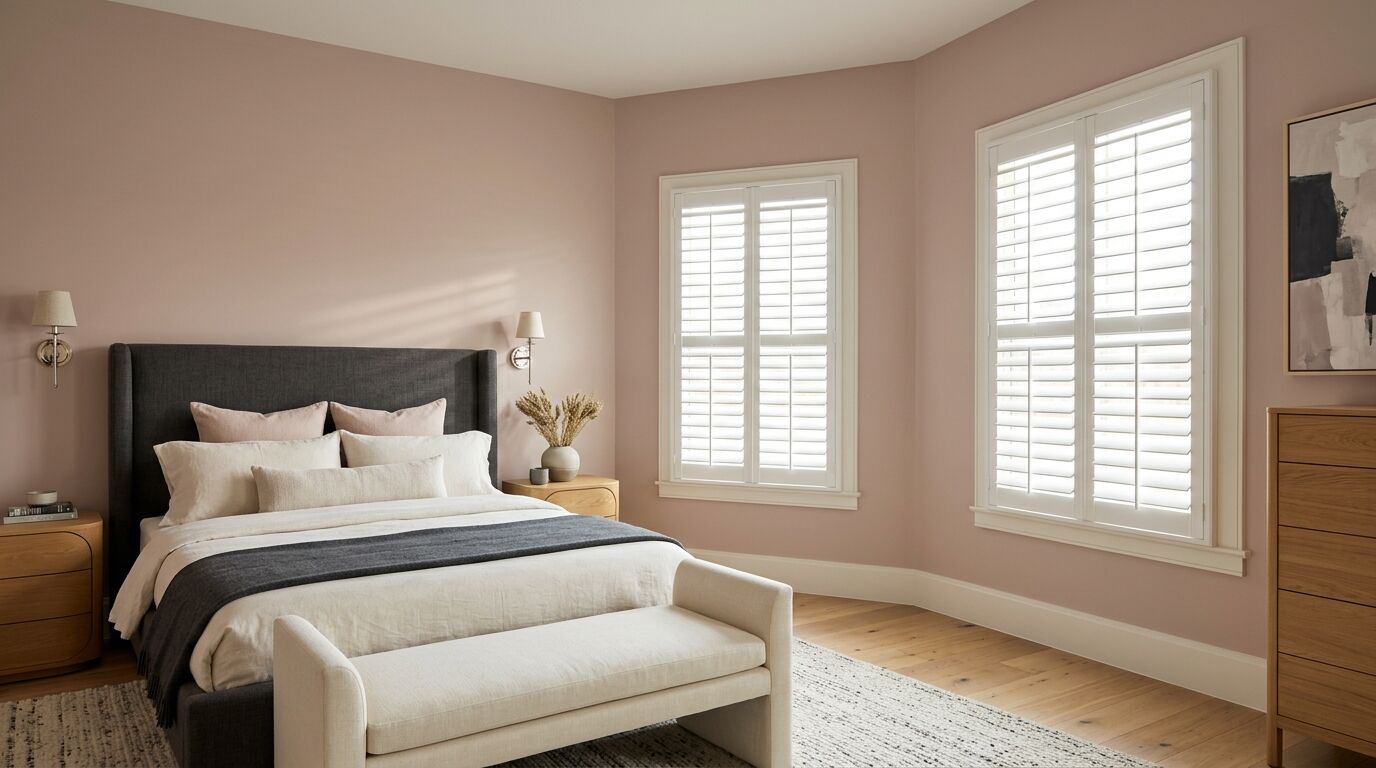
New Construction: When to Order Window Treatments
The measure cannot happen from a floor plan, and it cannot happen until the trim and paint are done. Here is how to time custom shutters, shades and blinds against a North Texas build schedule so the windows are covered close to move-in instead of six weeks after it.
Read article →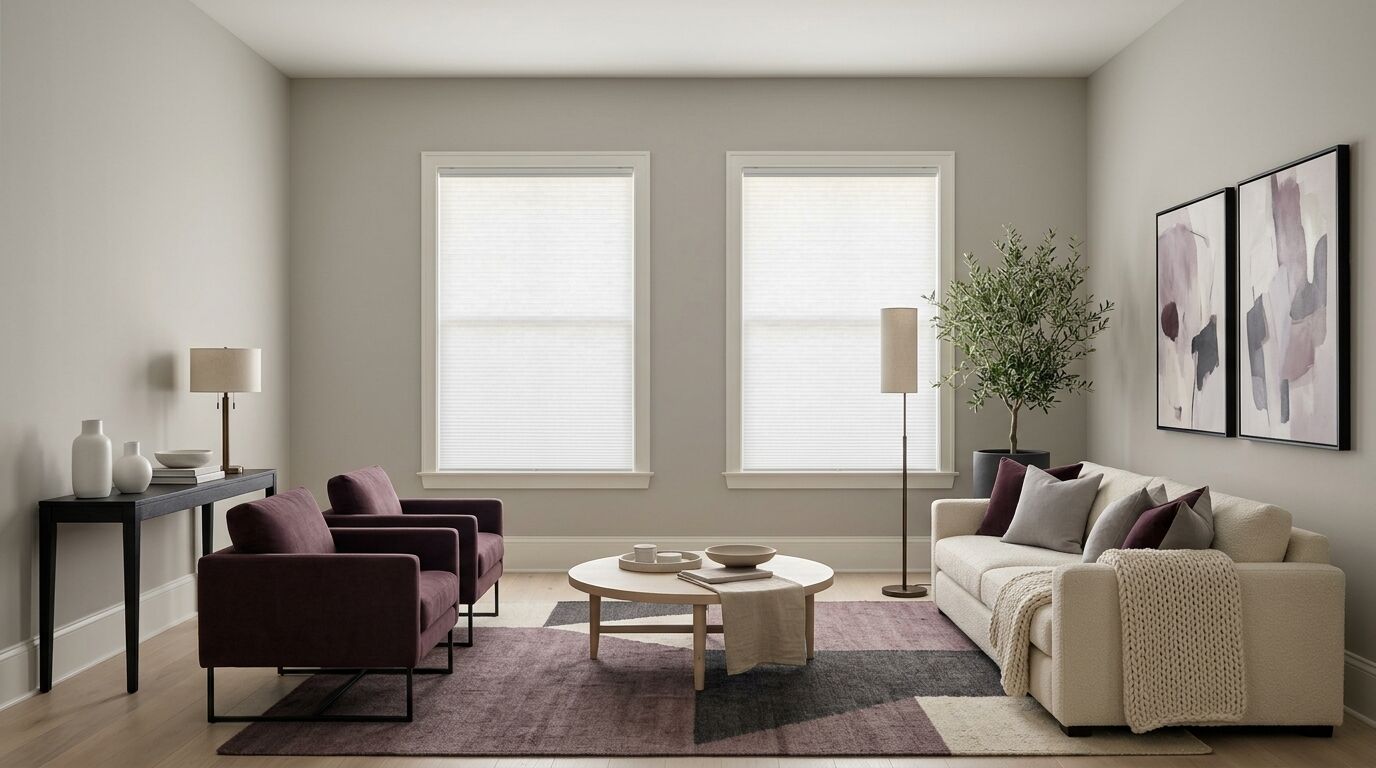
Top-Down Bottom-Up Shades: Privacy And Daylight At Once
One shade, two rails, and the only lift that covers a front window at eye level while leaving the daylight above it alone. Where it earns the upgrade, and the four situations where it does not.
Read article →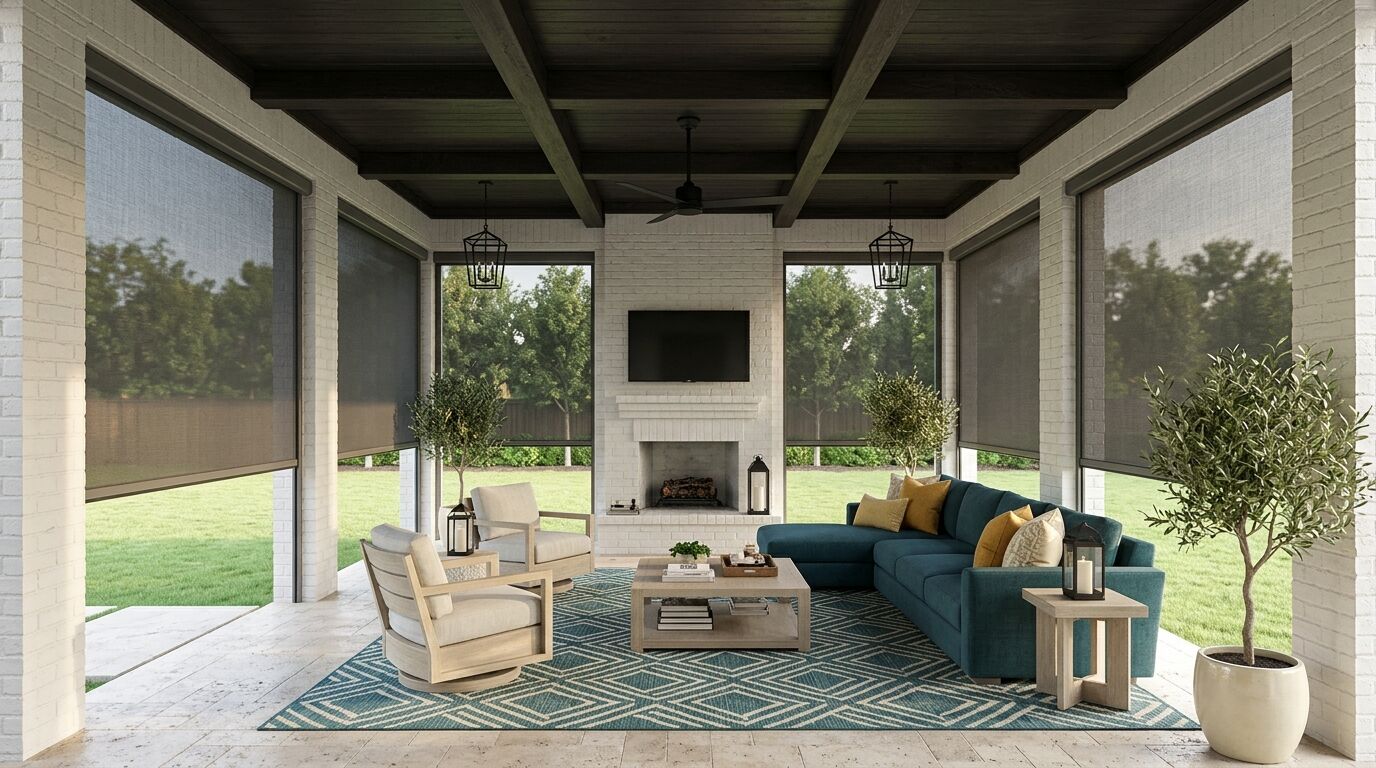
Screen or Solid? Choosing Outdoor Shade Fabric for Sun, Bugs and Privacy
The frame, the track and the motor are close to the same on every bay of a patio. The fabric is what decides whether you can still see the yard at five in the afternoon, whether you get bitten at dusk, and whether the space feels open or shut.
Read article →
What a Window Treatment Quote Should Actually Include
Two quotes for the same nine windows can differ by thousands, and the total at the bottom tells you almost nothing about why. The answer is in the lines above it, or in the lines that are missing. Here is what should be on the page.
Read article →
Battery or Hardwired? How Motorized Shades Get Their Power
Battery, plug-in, solar or hardwired. Most people never think about where a shade motor gets its power until the order form asks, and by then the cheap moment to hardwire has usually passed. Here is what each option really involves.
Read article →
How to Clean Shutters, Shades and Blinds Without Wrecking Them
Dust is the easy part. Nearly every window covering that gets damaged gets damaged during a cleaning, usually by water, a spray or a melamine sponge. Here is what poly, hardwood, fabric and woven shades will each safely take.
Read article →
Louver Size on Plantation Shutters: What Changes at 2.5, 3.5 and 4.5 Inches
All three louver sizes close to about the same coverage, so light control is rarely what decides it. What changes is how much you see through the panel when it is open, how the shutter reads at the scale of the room, and whether the louvers clear your window hardware.
Read article →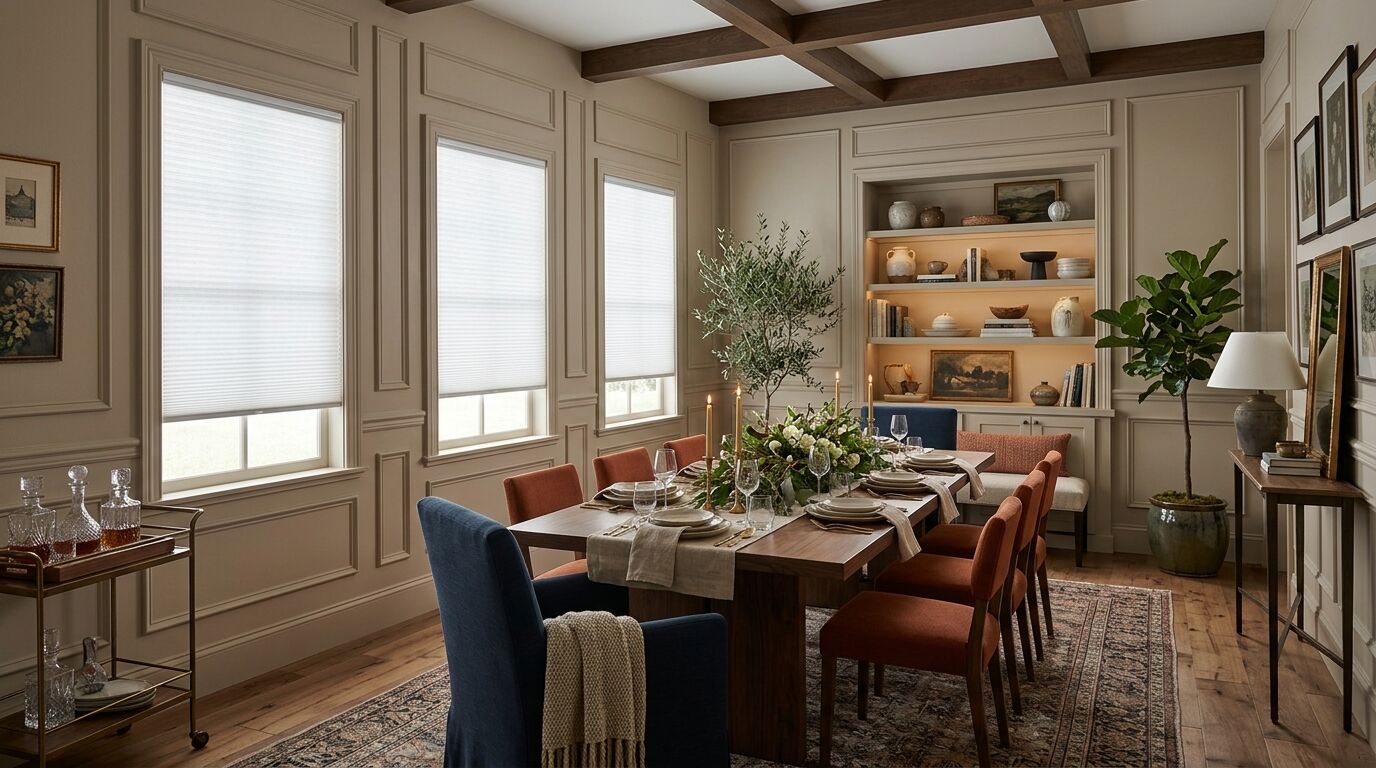
How Cellular Shades Actually Insulate a Window
The honeycomb is not decoration. Each cell holds a pocket of still air against the glass, and still air is what slows the heat down. Here is how that works, why a quarter inch of gap at the jamb undoes a lot of it, and where a different product does the job better.
Read article →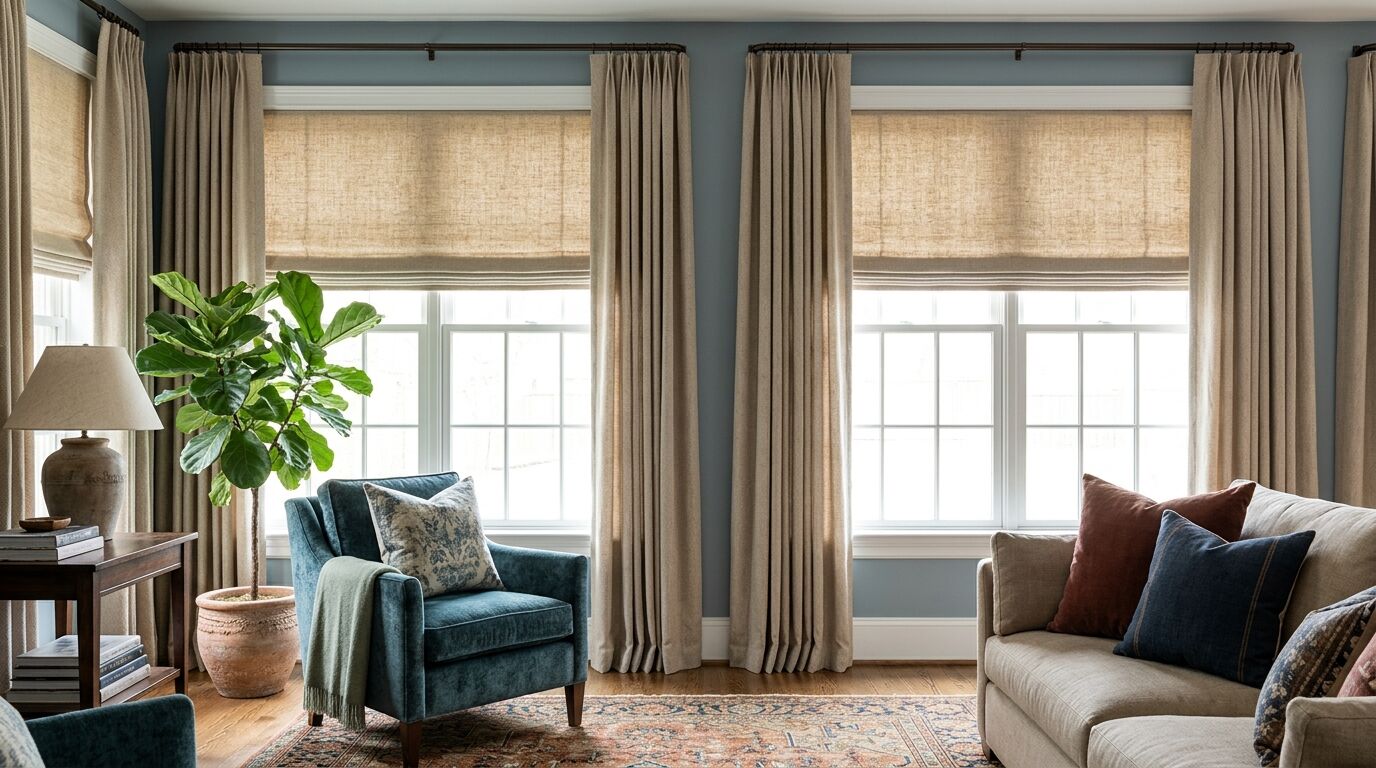
Layering Drapery Over Shades Without Making the Room Feel Heavy
The rod goes too low and the panels come out too narrow. Those two mistakes are why most layered windows end up looking shorter and darker than the bare glass did. Here are the numbers that fix both, and the windows where the honest answer is one treatment.
Read article →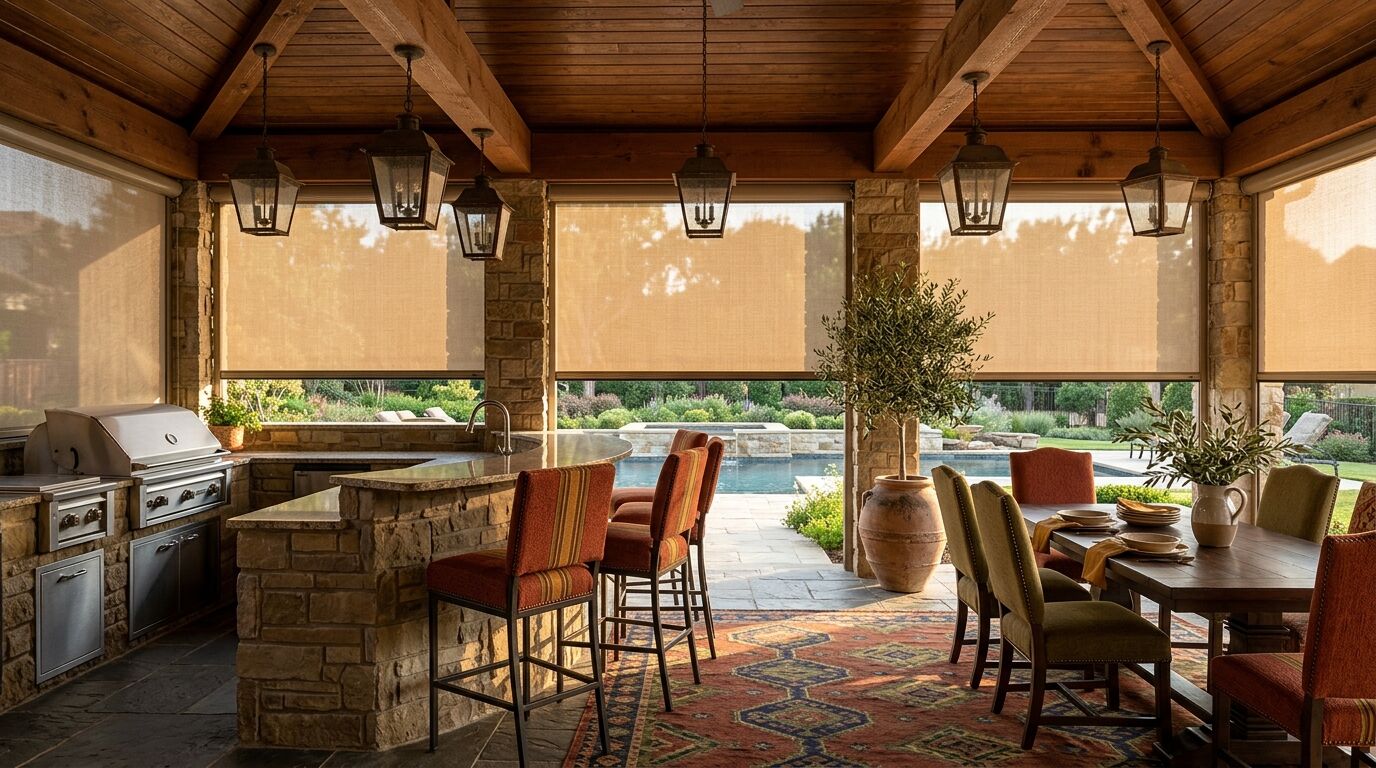
Why Track-Guided Outdoor Screens Hold Up in Texas Wind
Wind rarely tears the fabric on a patio screen. It pulls the vertical edge out of whatever is holding it. Here is the difference between cable, zipper and track-retained edges, and what a published wind rating actually covers.
Read article →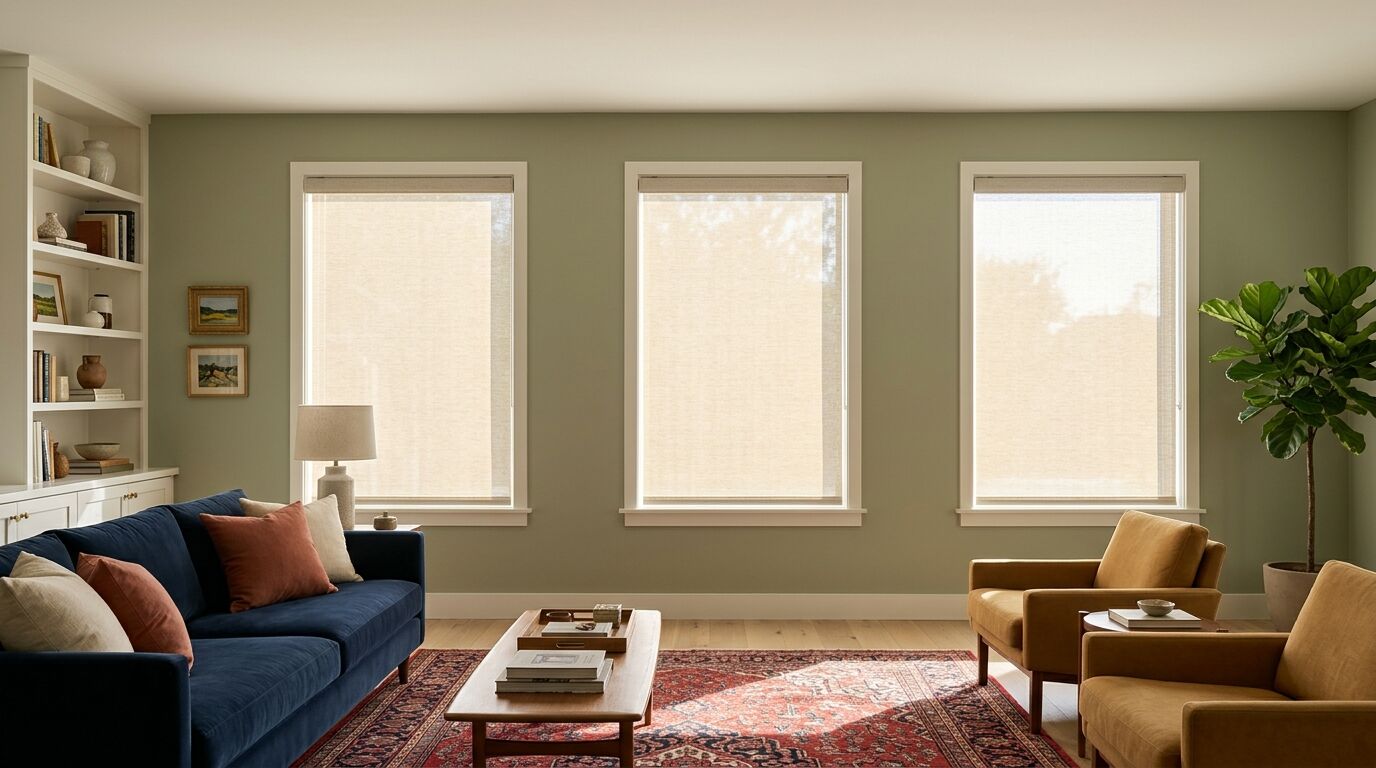
Texas Sun and Fading: Protecting Floors, Rugs and Furniture
The stripe of lighter floor by the back windows did not appear overnight. Here is what is actually bleaching your floors and rugs in North Texas, what low-e glass stops, and what has to happen at the window to slow the rest of it down.
Read article →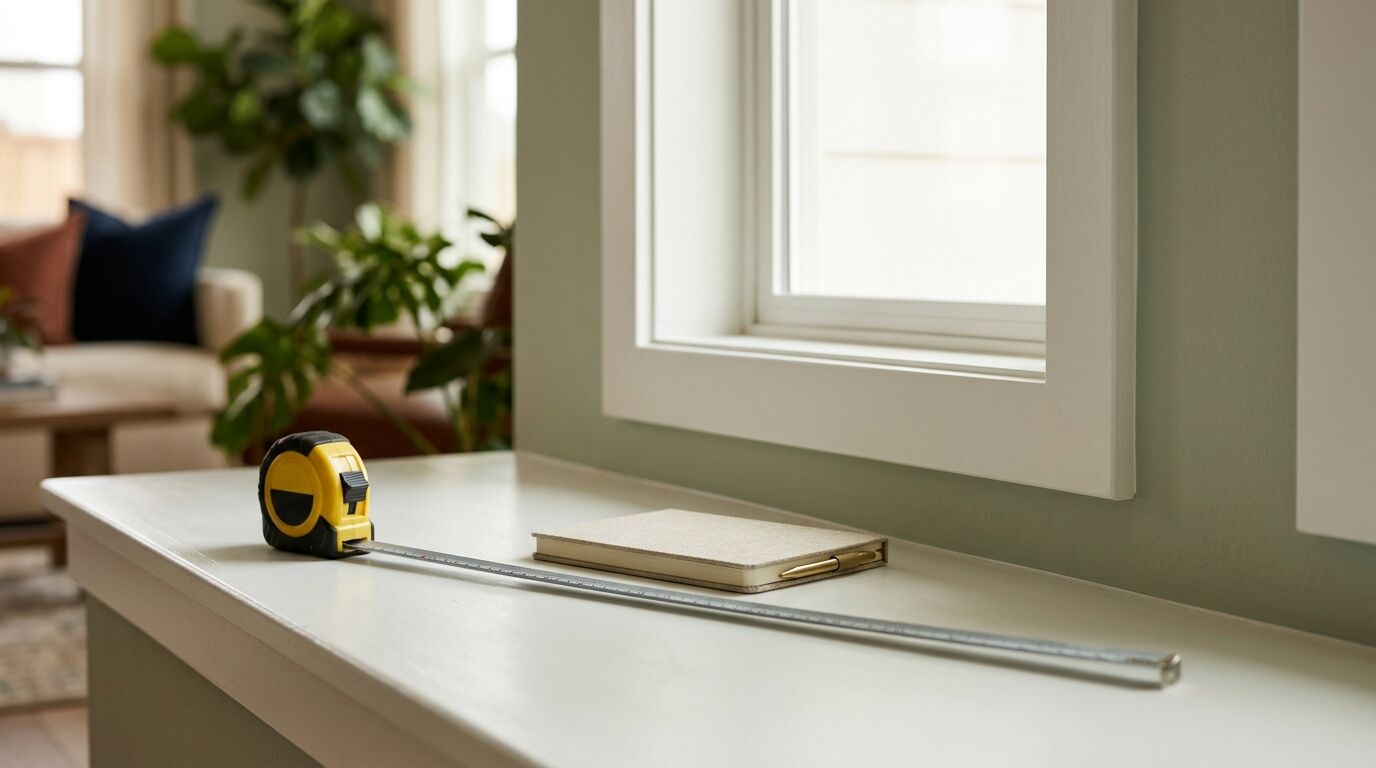
How to Measure Windows for Blinds and Shades (And Why We Do It for You)
Pulling a tape across a window is the easy part. Knowing which of the six readings to keep, and what the factory will do with them, is what decides whether your shade covers the glass or sits a quarter inch shy of it.
Read article →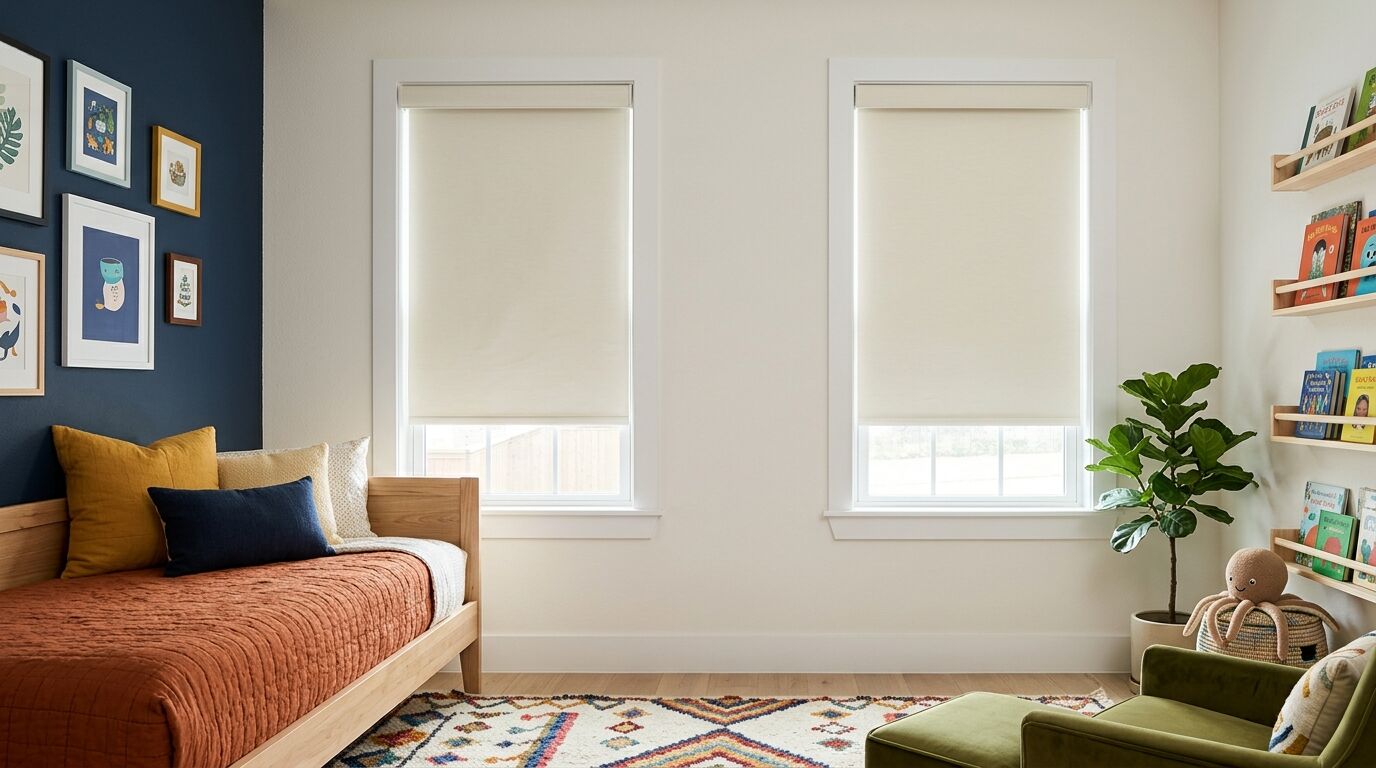
Cordless and Motorized: Window Coverings That Are Safe Around Kids and Pets
Three different cords cause harm, and "cordless" covers four mechanisms that behave differently. Here is what the 2024 standard changed, which option belongs in which room, and what to do about the corded blinds already hanging in your house.
Read article →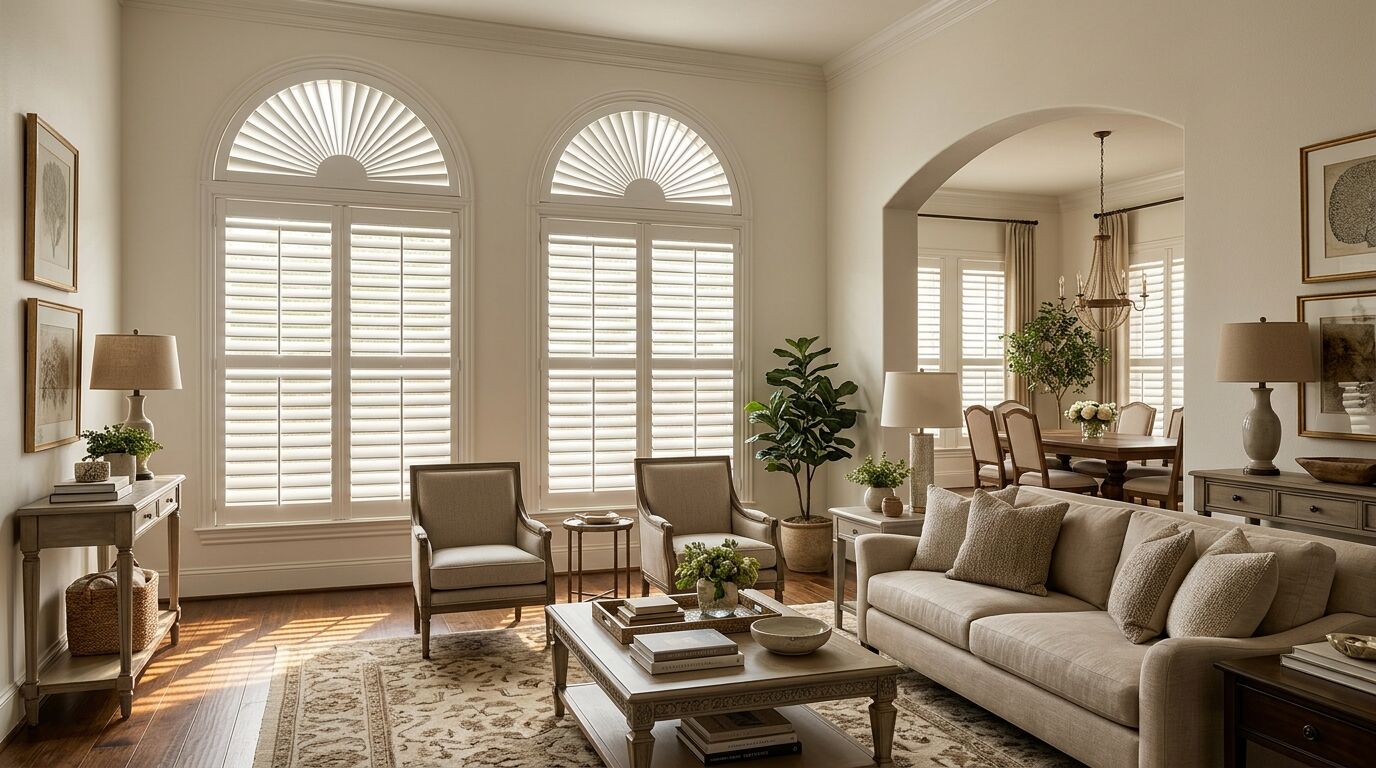
Arched, Angled and Eyebrow Windows: Your Real Options
An arch can be a fixed sunburst, a fixed panel that follows the curve, or an operable panel whose louvers tilt. Which one you can have depends on geometry, not preference. Here is how shaped windows actually get covered.
Read article →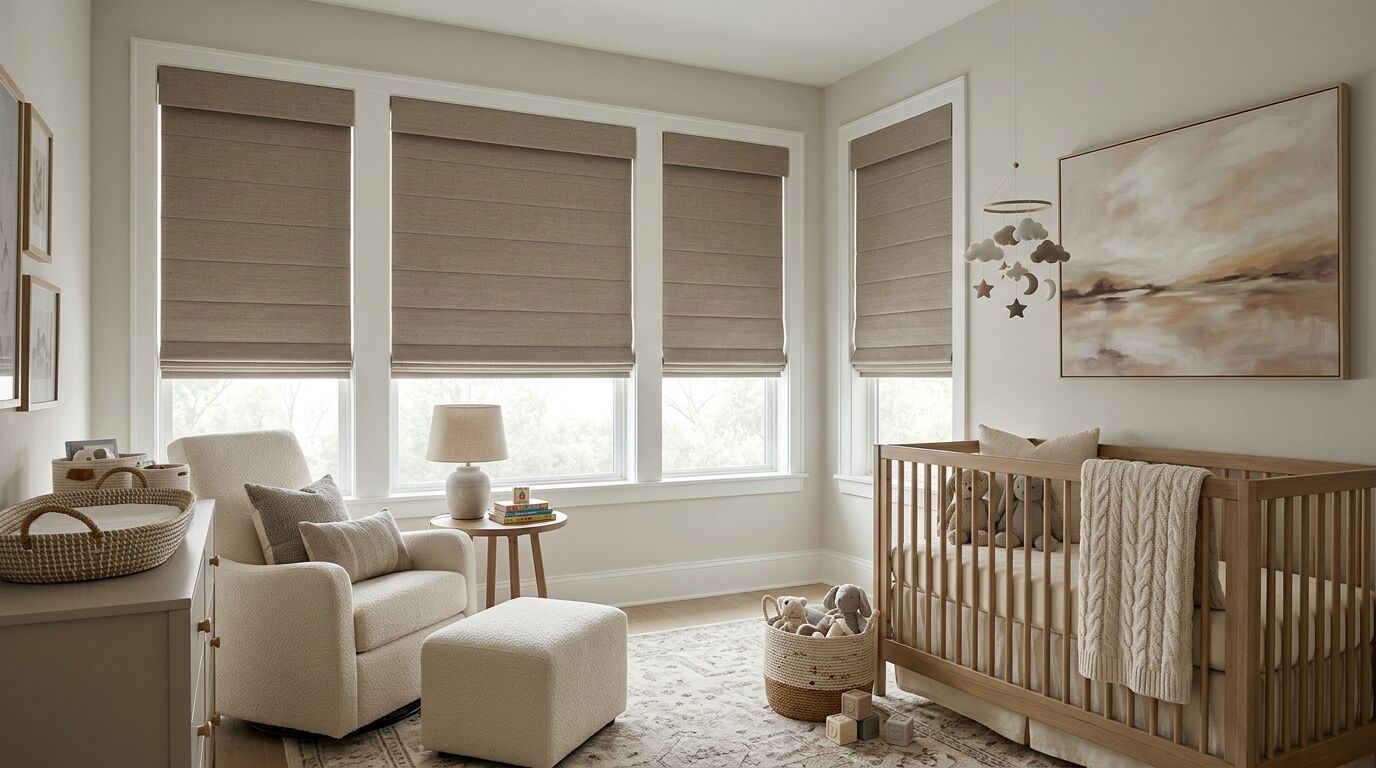
Room-Darkening vs. Blackout Shades: What Actually Blocks The Light
Blackout fabric blocks light through the material. It does nothing about the quarter inch of daylight running down each side of the shade. Where shades really leak, the two fixes that work, and how dark each room needs to be.
Read article →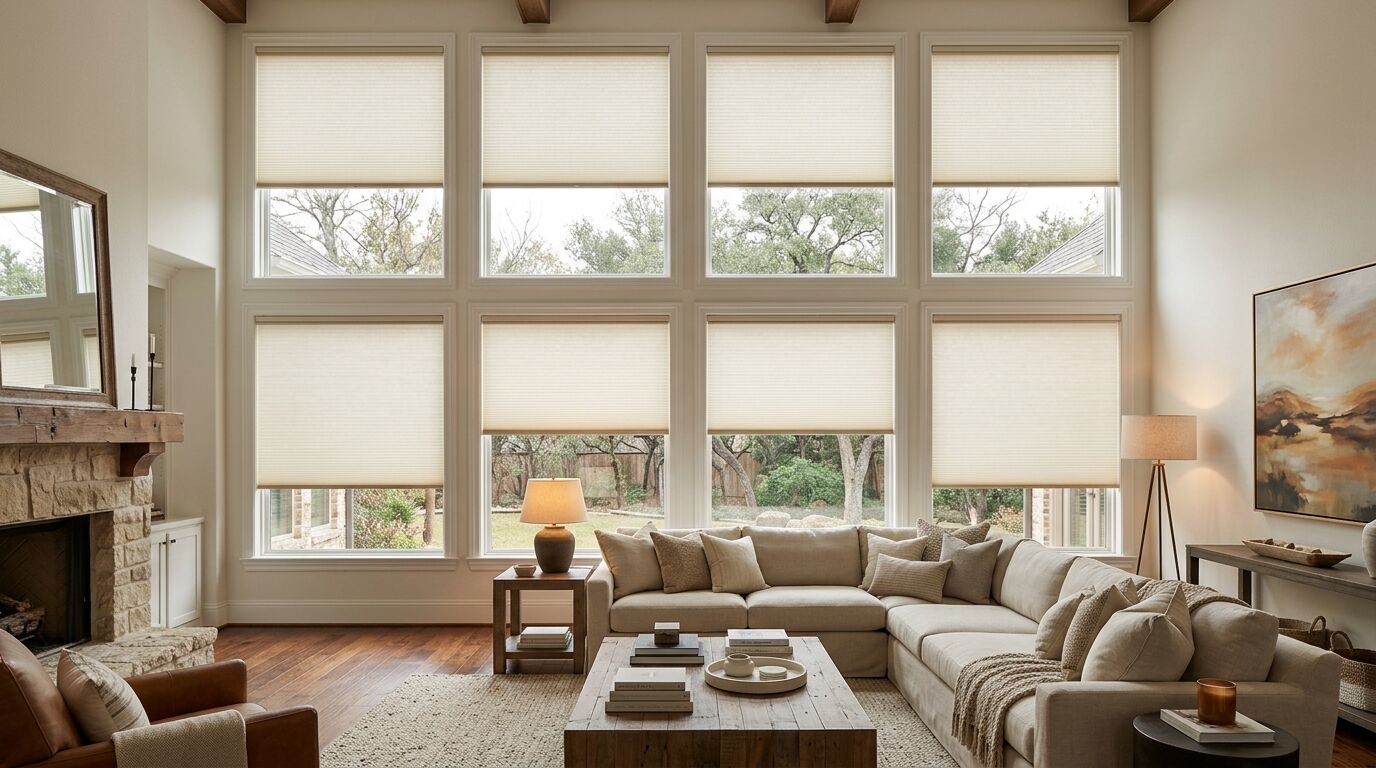
Tall Window Treatments for a Two-Story Great Room
The upper half of a two-story window is the half that cooks the room, and the half nobody can reach. Where to break the window, what works on tall glass, and the battery question to settle before you order.
Read article →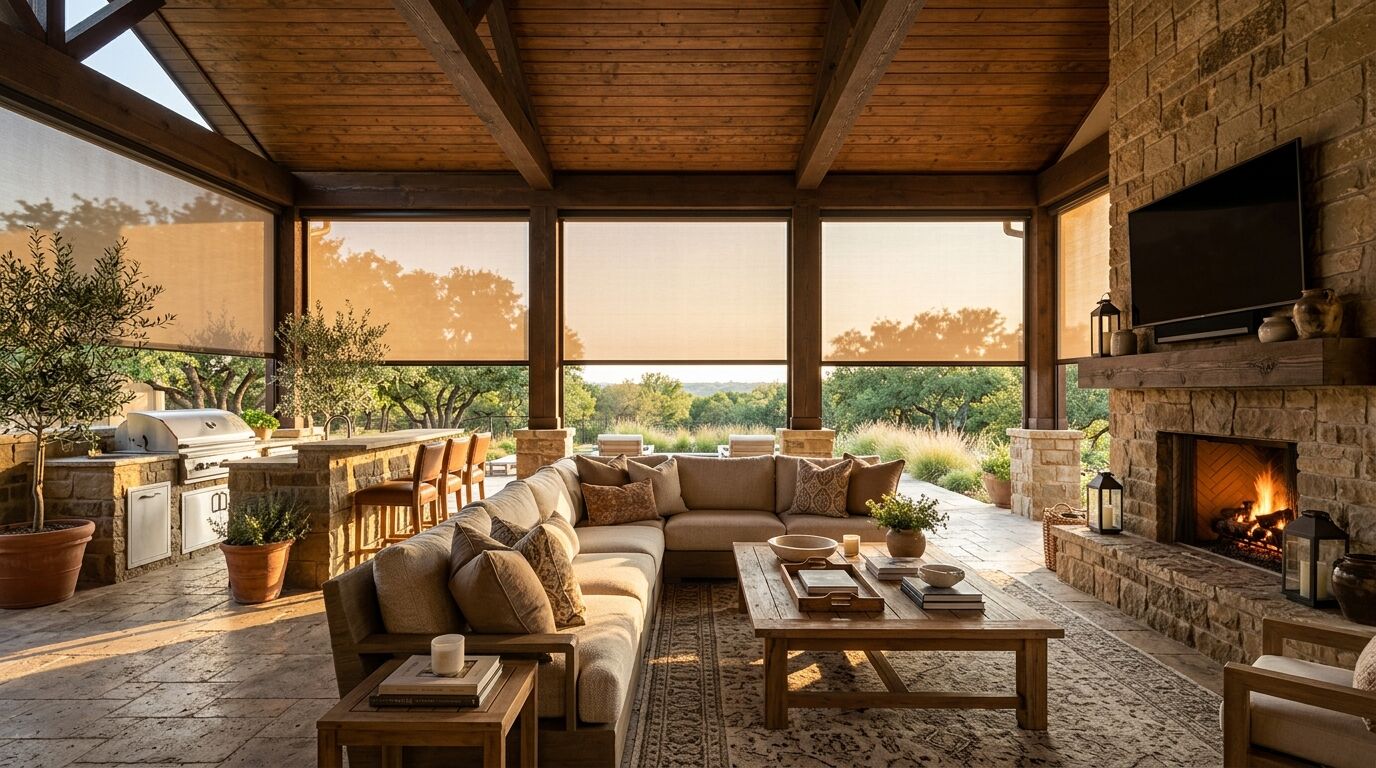
Shading a Texas Patio: How Outdoor Screens Actually Work
A covered patio goes unused from May to September because the roof stops the sun at noon and not at five. Here is how exterior screens work, what fabric openness really trades away, and why the side channel matters more than the fabric.
Read article →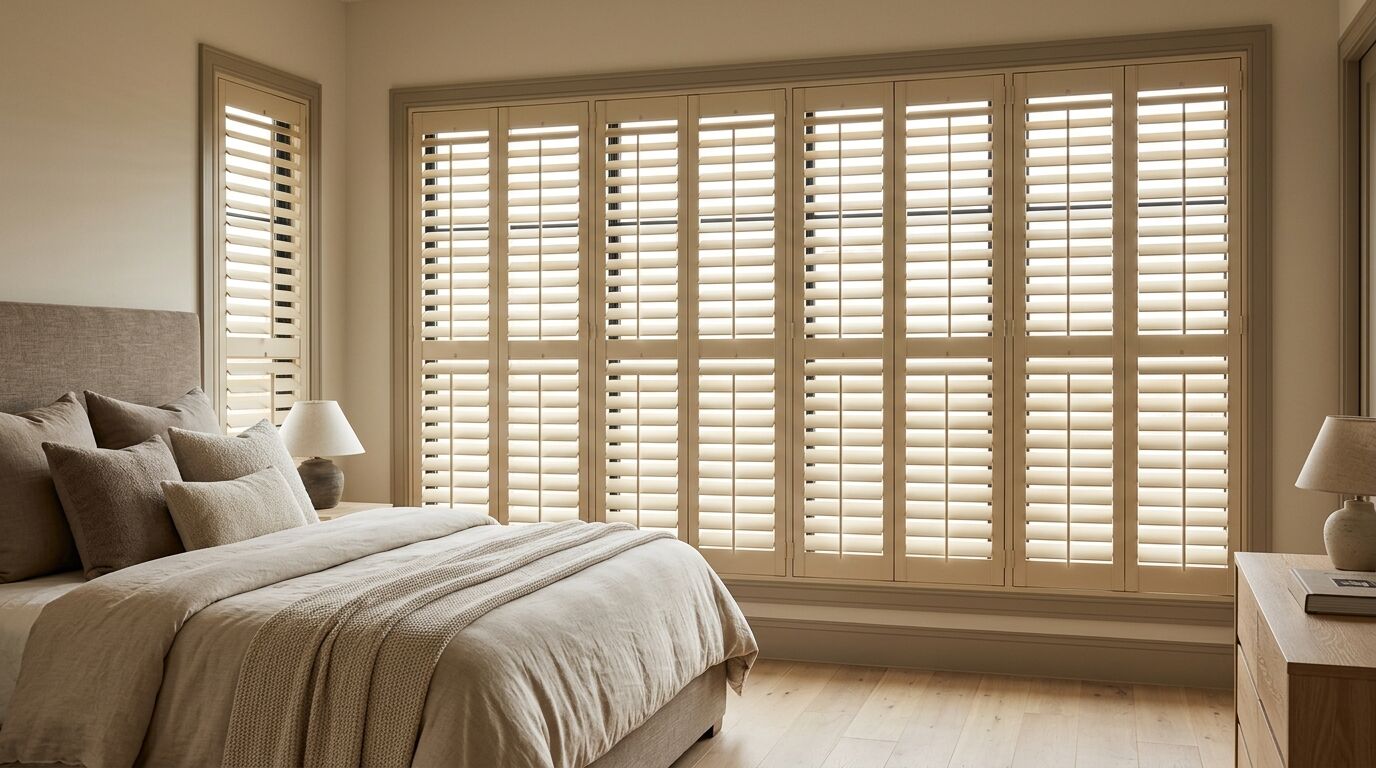
Poly or Wood Shutters? How to Choose Room by Room
Water and heat decide this more often than taste does. Where poly and composite belong, where hardwood earns its keep, and how to settle the whole house in about ten minutes.
Read article →
The Best Window Treatments for West-Facing Windows in North Texas
West sun arrives low, late and hot, and a roof overhang does nothing to stop it. Here is what works on those windows in a North Texas house, and what the products honestly cannot do.
Read article →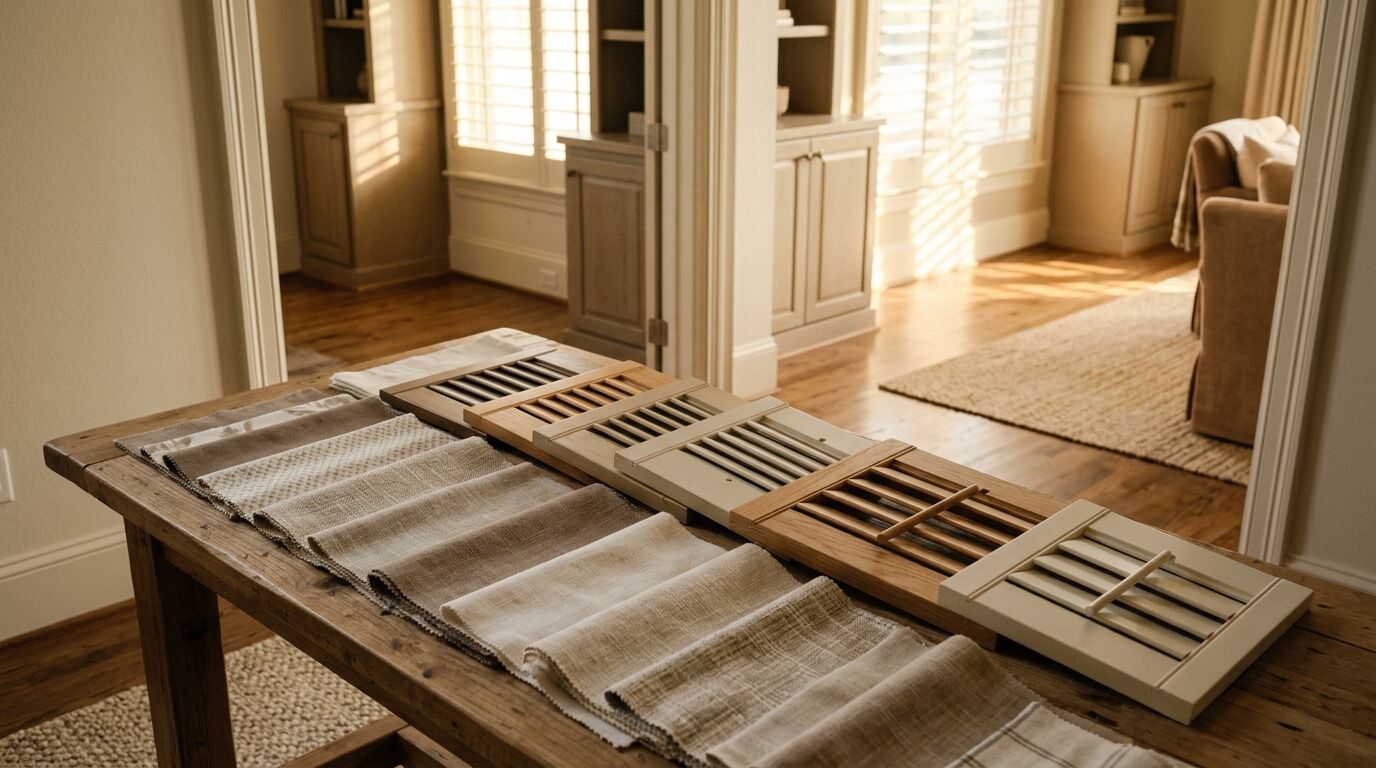
Plantation Shutters vs. Blinds: Which One Belongs in Your Room
Shutters are not automatically the better choice, and blinds are not automatically the cheap one. Here is how the decision actually breaks down, room by room.
Read article →