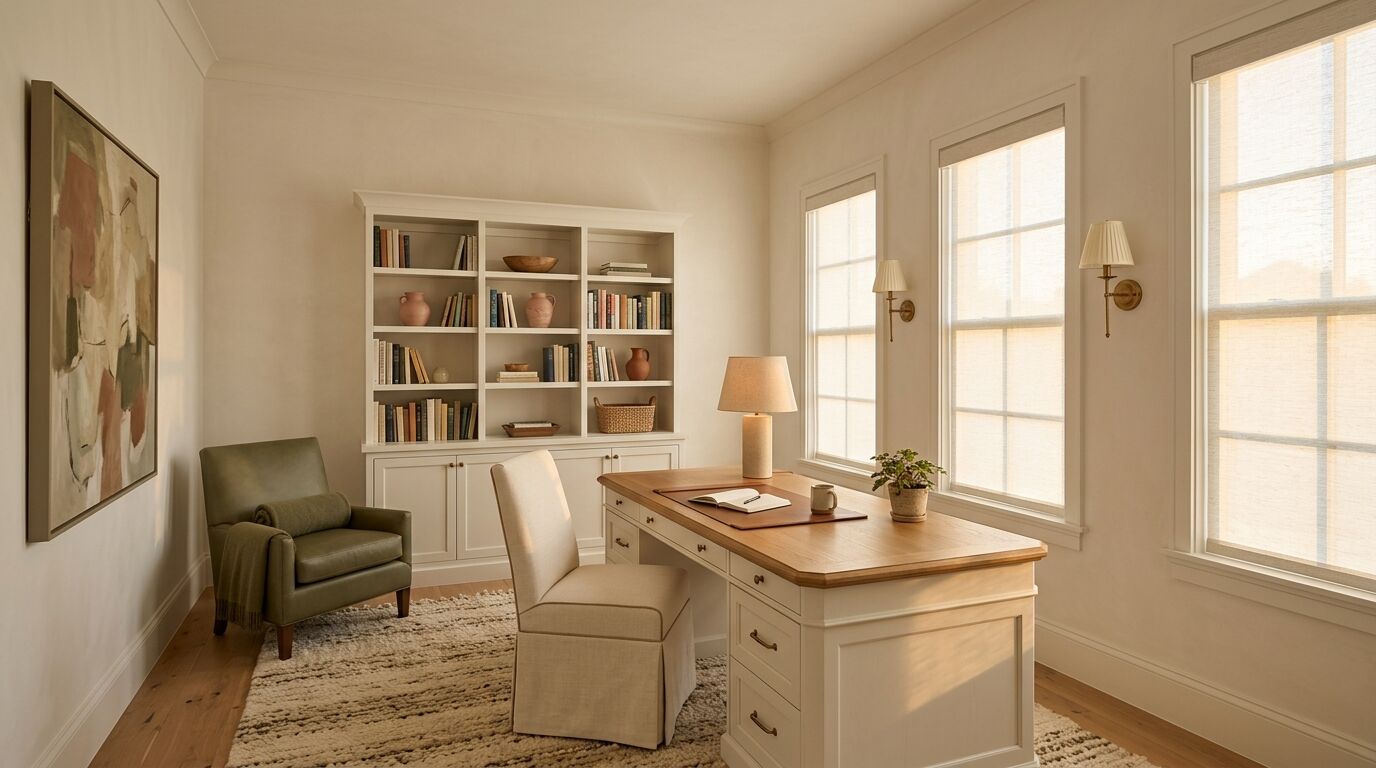
Your monitor washes out around three in the afternoon, and on your video calls you look like a silhouette. Same window, two different problems. Most advice treats them as one, and that's why the fix often disappoints.
- Glare on your screen comes from light hitting the monitor. A window behind you or beside the desk causes it.
- A dark face on camera comes from a bright window behind you. The camera sets its exposure for the window, not for you.
- A solar screen shade with a low openness factor cuts glare and keeps the view. A light-filtering fabric evens out the light on your face.
- Facing the window or sitting with it at your side usually beats sitting with your back to it.
- You only need true blackout if the office doubles as a place that has to go dark.
Two Problems, One Window
Screen glare is a reflection problem. Sun comes in, lands on the glass of the monitor, and bounces into your eyes. You squint, you tilt the screen, you move the chair. It's worst when the window sits behind you or off to one side at an angle.
The video call problem is the opposite. The window is behind your head, and it's far brighter than your face. A webcam sets its exposure for the brightest thing in view, so the window looks fine and you turn into a dark shape. Lowering the shade a little won't fix that. It has to change how much light is coming through the glass compared with the light on you.
Once you know which one is bothering you, the choice gets easier. Plenty of home offices have both, which is when the desk position matters as much as the shade.
Start With Where the Desk Sits
Before you pick a fabric, look at the desk. The calmest setup for most people is the window off to one side, so the light crosses the desk instead of hitting the screen head on or coming from behind you. It's worth spending ten minutes moving the desk if the room allows it.
If the desk has to stay put, the shade does more of the work. In a lot of North Texas homes the office is a front room with a big west or south window, so the afternoon sun comes in low and hard. That's the case where fabric choice earns its keep.
Cutting Screen Glare Without Losing the View
A solar screen shade is a woven fabric that blocks a share of the sun before it enters the room while you can still see out. The share it lets through is called the openness factor. A lower number blocks more light and gives more daytime privacy, and a higher number keeps more of the view. We go through the numbers in our guide to solar shade openness factor.
For an office, a lower openness fabric is usually the better pick on a west window, because the glare is the thing you're fighting. One honest limit: solar screens don't give you privacy at night when the room is lit. If the office faces the street and you work late, plan for something else on that window.
A top-down bottom-up shade is worth a look if the problem light comes from low in the sky. You can lower the top of the shade to block the glare band and leave the lower part open for the view. Our post on top-down bottom-up shades explains how they work.
Fixing the Dark Face on Video Calls
If the window is behind you, the goal is to bring the window brightness down toward the light on your face. A light-filtering roller or cellular shade does that. The fabric glows softly instead of showing a hard rectangle of sky, and the camera can expose for you again.
Closing a blackout shade behind you will also work, but it can make the room feel like a cave at two in the afternoon. Light-filtering is the gentler answer for most people. If you want both options, a dual roller shade with a sheer and a blackout layer lets you pick by the hour.
The simplest fix of all is turning the desk to face the window. The light then falls on your face, and the shade only has to handle glare on the screen, which a solar fabric does well.
When You Do Want Blackout
Some offices are also guest rooms, nurseries or media spaces. If the room has to go dark, blackout fabric is the answer, but know what it means. Blackout blocks light through the fabric. A roller shade still leaks around the edges unless it runs in side channels. Our comparison of room-darkening and blackout shades covers the difference.
Cords, Reach and Motors
A desk that sits under a tall window means a shade you can't reach easily. Cordless lifts keep the area tidy, and they're the safer choice if kids or pets wander through. A motor lets you drop the shade for a call without leaving your chair, and it can run on a schedule so the west window closes itself when the sun swings round. Battery motors are common, and most retrofits don't need an electrician.
How to Decide
Pick the problem that bothers you most. Screen glare points to a lower openness solar screen. A dark face on camera points to light-filtering fabric or a change in where you sit. A room that has to go dark points to blackout with side channels.
Sheila can sit at your desk, look at the window at the hour it bothers you, and tell you which of these fits. That's part of the free in-home consultation. Shades usually take 2 to 3 weeks from order to installation, and the exact timing is confirmed the day you order. Start with our custom window shades or ask for a consultation.
See it in your own light.
Every room measures differently. Sheila comes to your home, looks at your actual windows and light, and helps you choose what fits. No showroom pressure, no obligation.
Book a free consultationProduct options, pricing and lead times vary by manufacturer and by window. Details here are general guidance — your in-home consultation is where we confirm what actually fits your home.