Open a North Texas house in April and the air inside can feel damp. Come back in August with the air conditioner running all afternoon and the same rooms are dry. Wood shutters live through both, so the question most people ask is whether they will warp.
- Wood takes on and gives off moisture as the air around it changes, and it moves mostly across the grain.
- In a conditioned house the daily swings are small. Damp rooms and big seasonal swings are what cause trouble.
- Poly and composite do not take up moisture the way wood does, which is why they go in bathrooms, laundry rooms and kitchens.
- Hardwood is a good choice in rooms where the air stays steady, like dining rooms, studies and most bedrooms.
- Sheila looks at the room and the window together, because the same house can call for both materials.
What Wood Does When the Air Changes
Wood is never fully still. It settles toward the moisture level of the air around it, taking on water when the air is humid and releasing it when the air is dry. The USDA Forest Service Wood Handbook chapter on drying and moisture control says daily humidity swings cause only small changes, while seasonal changes are the larger concern. It also notes that a protective coating slows that movement but does not stop it.
That is the honest answer to the warping question. A painted or stained hardwood shutter is not defenseless, and it is not immune either. It moves a little with the seasons, and a well built panel is made to tolerate that.
Why North Texas Puts Shutters Through More
Our climate does not hand a shutter a steady day. Spring can bring damp air through the house. Summer sends the air conditioner to work for months, which dries the rooms out. Winter heating dries them again. Then there is the glass itself. A west-facing window can run much hotter than the room around it, and the shutter sits right in that heat.
None of this means wood fails here. It means the room matters more than the material, and a shutter that does well in a dining room can have a harder life over a soaking tub. If your west windows are the main worry, our post on west-facing windows in North Texas goes deeper on the sun side.
Where Poly Is the Safer Choice
Poly and composite shutters are built around an engineered core with a hard finish, so they do not swell and shrink with humidity the way a wood panel can. That is the reason we steer people to them in the rooms where moisture shows up every day.
The usual list is a primary bath with a shower, a laundry room, a kitchen window near the sink or cooktop, and any window that bakes in direct afternoon sun. In those spots the swing between wet and dry, or between cool and hot, happens daily instead of seasonally. Poly also wipes clean with a damp cloth, which helps over a kitchen sink.
Where Hardwood Holds Up Fine
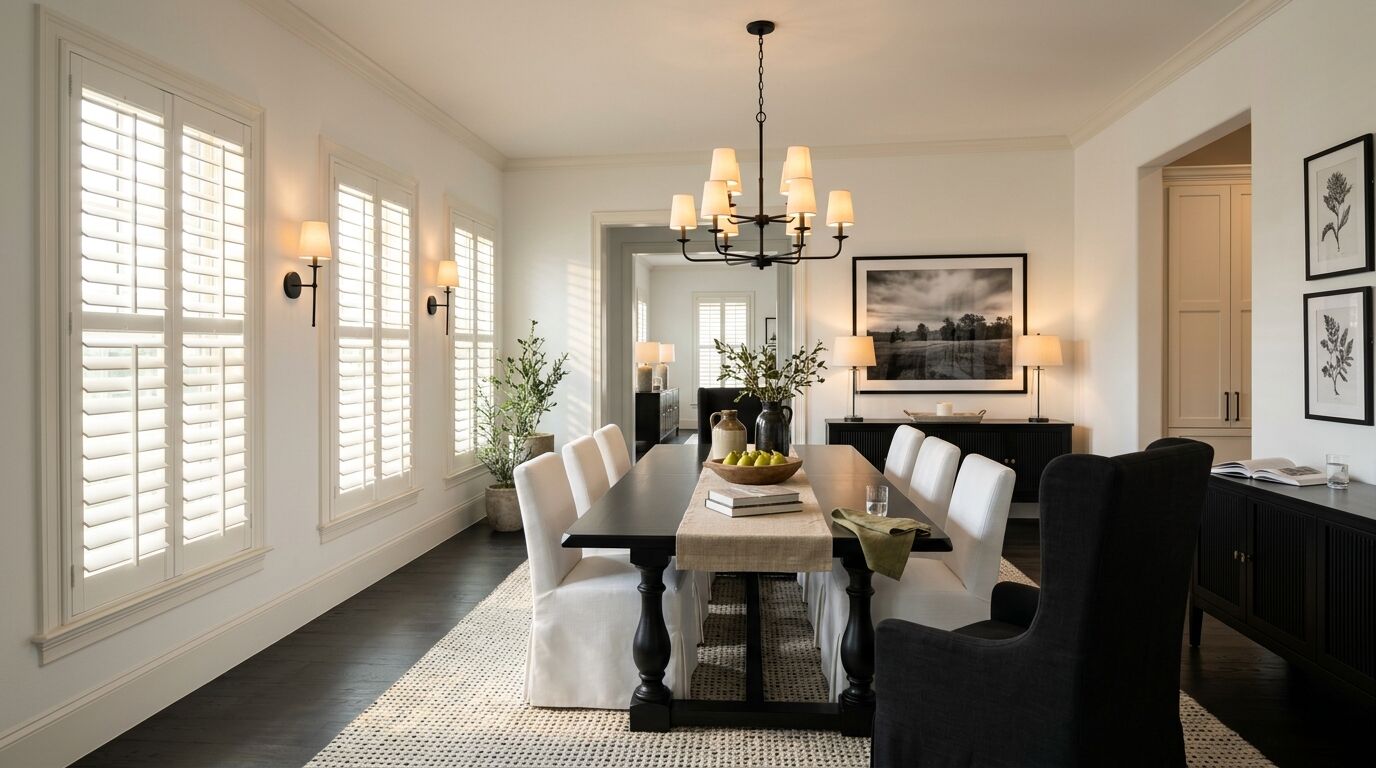
Most living rooms, dining rooms, studies and bedrooms in a cooled and heated home keep a fairly steady level of humidity. That is the setting hardwood was made for. You get real grain, the option of a stain, and the widest louvers, which suit big windows and tall rooms.
A hardwood shutter in a dining room and a poly shutter in the bath down the hall is a normal combination. Once they are painted the same white, nobody can tell which is which from across the room. Our longer guide to poly versus wood shutters walks through room by room choices, including panel width and louver size.
Habits That Help Any Shutter
A few small things go a long way. Run the bath fan during and after a shower. Wipe water splashes off louvers when you see them. Keep the thermostat on a steady setting rather than letting the house swing hard while you travel. If a panel has started to stick or a louver sits crooked, call us early, because a small adjustment is easier than a big repair.
How to Decide for Your House
Walk through the house and make a quick note of which windows get steam, grease, or hard sun. Those are your poly candidates. The rest are free to be hardwood if you like the look.
If you would rather not guess, Sheila will look at each room during a free in-home consultation. She measures your actual windows in your actual light, and she can tell you where the material choice matters and where it does not. This is how we work with homeowners in Prosper and across North Dallas. You can start with our custom plantation shutters page or request a consultation. Our Prosper window treatments page has more on the area.
See it in your own light.
Every room measures differently. Sheila comes to your home, looks at your actual windows and light, and helps you choose what fits. No showroom pressure, no obligation.
Book a free consultationProduct options, pricing and lead times vary by manufacturer and by window. Details here are general guidance — your in-home consultation is where we confirm what actually fits your home.