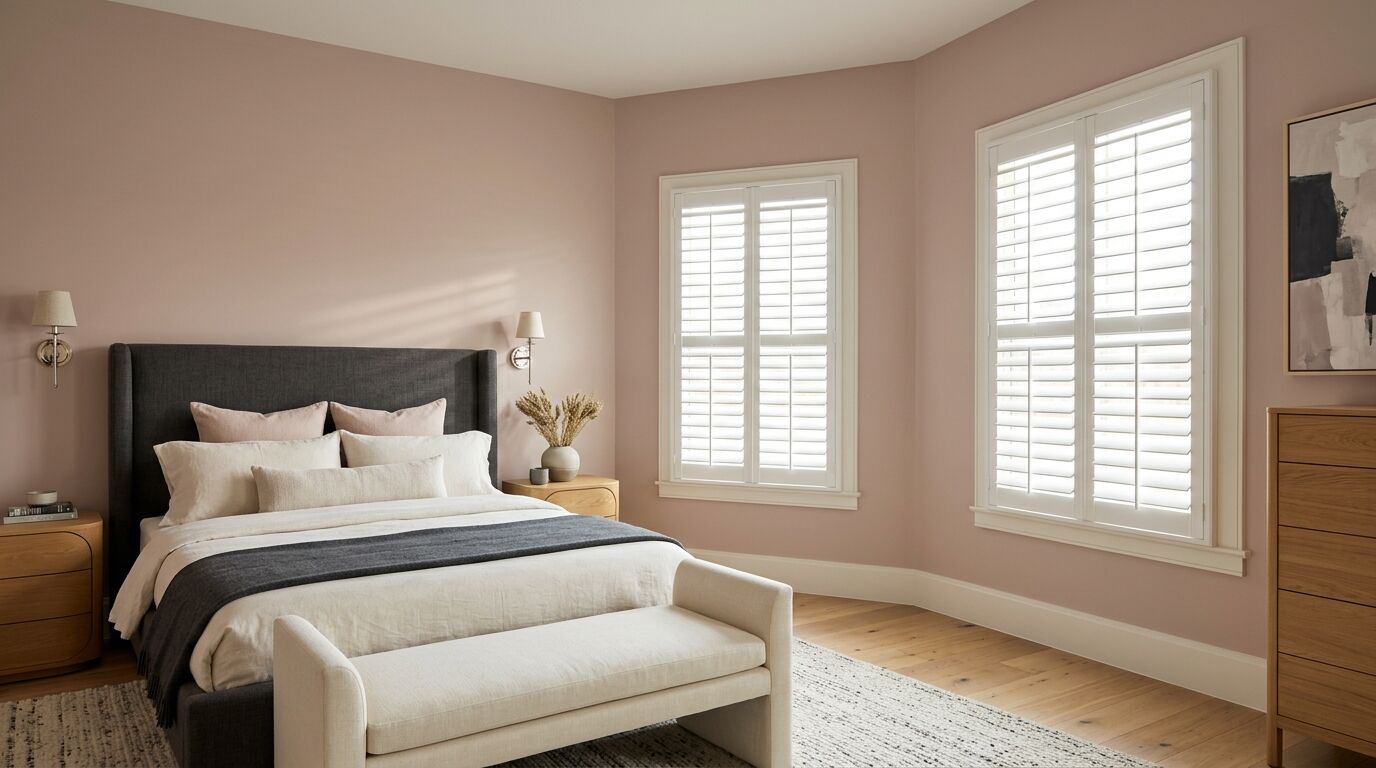
Most people in a new build think about window coverings twice. Once at the builder's design studio, where it is far too early to measure anything, and again about a week after they move in, standing in a bright empty living room while the neighbours look straight through it. The stretch between those two moments is where the whole thing goes sideways, and it is simple to plan around once you know which dates actually matter.
- Nobody can measure from a floor plan. Openings change as they get trimmed and painted, and custom orders are built to the finished number.
- The measure happens after windows, trim and paint are complete, which is usually a few weeks before closing.
- Blinds and shades typically run two to three weeks from order to install. Shutters typically run six to eight weeks, and up to twelve in a busy season.
- Work backward from your closing date rather than forward from today.
- Hardwired motors have to be decided before drywall. Battery motors can be added any time.
- Builder blinds buy privacy on day one. They are rarely meant to be the finish.
- If you are phasing, street-facing rooms and bedrooms go first.
A Floor Plan Is Not a Measurement
Framed openings move. The rough opening gets insulated, the drywall returns get floated, the casing goes on, the painter fills and caulks it, and by the time all that is done the inside dimension of the window is not the number printed on the plan.
Two windows your builder calls identical can finish an eighth of an inch apart. On an inside mount, an eighth of an inch is the difference between a shutter frame that slides in clean and one that goes back to the factory.
Custom window coverings are built to the window and cannot be returned or resized, which is the whole reason the measure happens on site with the trim in place. There is more on how that works in why we measure your windows instead of letting you do it.
The Date to Work Backward From
Closing. Not your contract date, not the framing walkthrough, not the day the windows go in.
The measure can happen as soon as the windows are installed and the trim and paint are finished, which on most builds around here lands a few weeks ahead of closing. Installation happens once you own the house. So the two dates to get from your builder are: when will trim and paint be complete, and what is the current projected closing date. Everything else fits between them.
Build dates slide. That is normal, and it is why the plan should be flexible at the front and firm at the back. In Prosper and Celina especially, where whole streets go up at once, a superintendent's date in March can be a different date by June. Book the measure loosely, confirm it the week trim finishes, and the order goes in the same day.
What the Lead Times Do to Your Calendar
Here are the real numbers, and they are the reason shutters and shades need different plans.
- Blinds and shades: about two to three weeks from order to installation.
- Plantation shutters: typically six to eight weeks across the industry, with some manufacturers running to twelve in a busy season.
- Drapery: too variable to quote a range honestly. Fabric availability, the workroom queue and hardware all move on their own schedules.
Treat those as typical ranges rather than promises. The exact timeline gets confirmed the day the order is placed, because it depends on the manufacturer and what else is in their queue that month.
Run the shutter number against a real calendar and you can see the problem. If you want shutters up in the great room the week you move in, the measure has to happen roughly two months before you unpack, which for most builds means the trim crew is your critical path. Miss that window and you live with bare glass in the front of the house for a while.
There is one exception worth knowing about right now: a limited-time run of hardwood shutters measured, built and installed within two weeks. Against a six to eight week norm that is unusual, and for a family closing in the next month it changes the order of operations completely. Hardwood only, and not specialty shapes or whole-house orders.
The One Decision That Belongs Before Drywall
Motorization. Specifically, whether you want hardwired motors.
Hardwired shades take low-voltage wire run to the head of each window, and that wire goes in while the walls are open. Once the house is insulated and sheetrocked, the clean version of that job is gone.
This matters less than people fear. Battery-powered motors handle most of what homeowners want, they need no electrician, and they are what goes into nearly every retrofit. So the deadline is real but the stakes are moderate. If you know you want hardwired power on a two-story window wall, say so before drywall. If you are not sure, batteries keep the option open.
Tall great room glass and high transoms are where motorization earns its money in these houses, because nobody is dragging a ladder out twice a day.
What the Builder Leaves You
It varies. Some builders include basic blinds throughout, some cover only the bedrooms, some hand you a bare house and a catalogue from the design studio.
Basic builder blinds are usually a stock-size product in a standard white, chosen to give privacy on move-in day at the lowest cost to the build. They do that job. Living behind them for a season while you save up and decide is a reasonable thing to do, and I would rather someone do that than rush a whole-house order they regret.
The trap is quietly accepting them as the finished house. Two summers later the west-facing living room is still hot at four in the afternoon, the slats have started to bow, and the decision that was going to happen in six months has not happened at all.
If You Cannot Do Every Room at Once
Most people cannot, and phasing works fine as long as the order makes sense. A reasonable sequence:
- Street-facing rooms and any bedroom on the ground floor, because privacy is the thing you notice first.
- The rooms you actually live in, especially west and south-facing glass where the heat and glare are worst.
- Bathrooms and the primary suite.
- Guest rooms, formal dining, the study.
Phasing costs a little more overall than one order, since each phase carries its own measure and install. It is still a far better outcome than guessing at the whole house in one afternoon to save a trip.
A Timeline That Actually Works
- Three to four months out. Walk the plan. Decide roughly which rooms get shutters and which get shades, and whether you want hardwired motors anywhere.
- Before insulation and drywall. Any motor wiring gets run.
- Trim and paint complete. Sheila measures the actual windows in the actual light, room by room.
- Order day. Product, fabric and colour are locked, and the manufacturer's timeline is confirmed for your specific order.
- After closing. Professional installation, usually in one visit for the phase you ordered.
None of this requires you to know what you want on day one. It only requires you to know when the measure can happen, and to get on the calendar before the trim crew finishes rather than after.
If you are building in North Texas and want to talk it through against your own closing date, the in-home consultation is free and there is no obligation attached to it. Bring the builder's schedule and we will work backward from it together.
See it in your own light.
Every room measures differently. Sheila comes to your home, looks at your actual windows and light, and helps you choose what fits. No showroom pressure, no obligation.
Book a free consultationProduct options, pricing and lead times vary by manufacturer and by window. Details here are general guidance — your in-home consultation is where we confirm what actually fits your home.