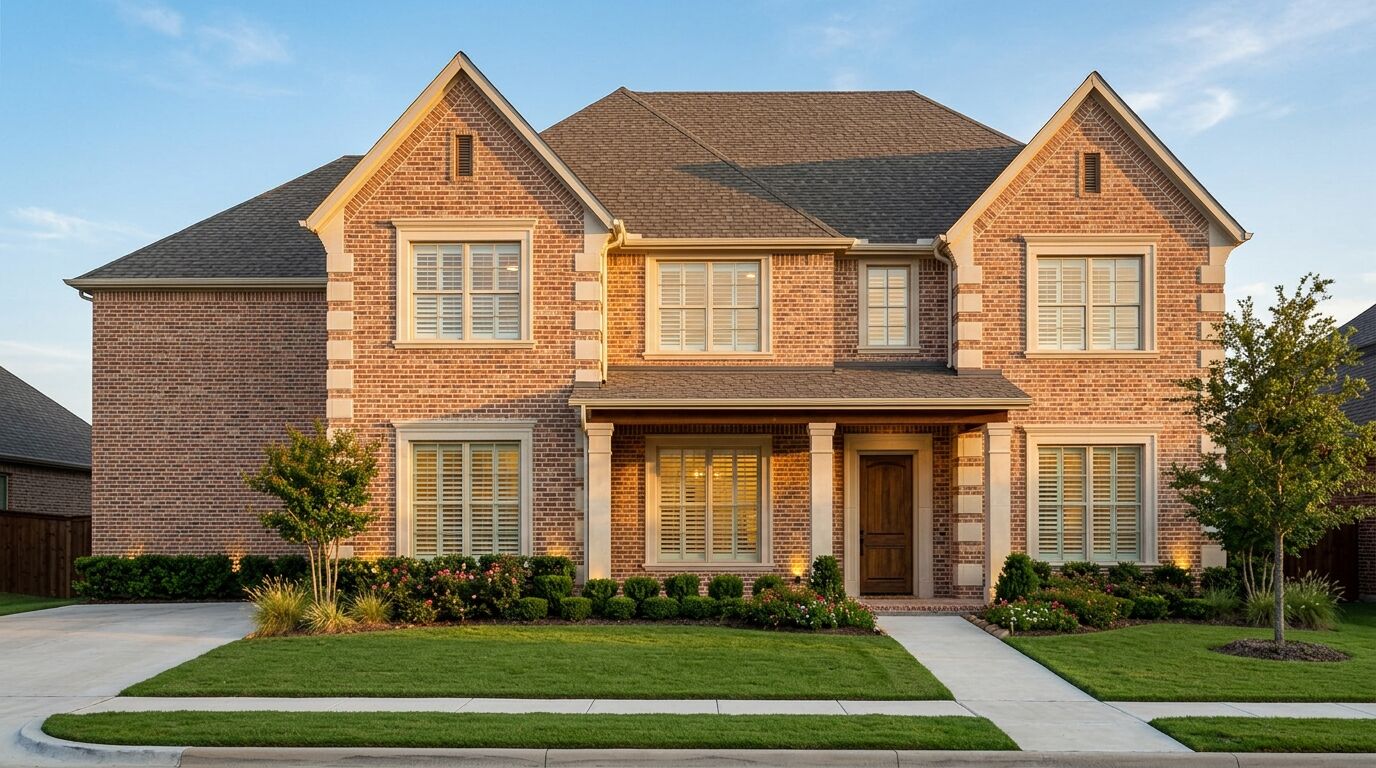
Most of the paperwork that came with your house says nothing at all about window coverings, for pages at a time, and then one line in the architectural standards says everything. It is almost always about colour, and it almost always applies only to what a neighbour can see from the road. Find that line before you order, because custom window treatments are built to your openings and cannot go back.
- Associations care about the outside face of the covering. What the room side looks like is your call.
- The usual rule: anything visible from the street reads white, off-white or beige, or carries a lining in one of those colours.
- The wording lives in the recorded CC&Rs or the architectural guidelines, not in the newsletter or a neighbour's memory.
- Shutters and many cellular shades already comply. Stained wood blinds, dark solar screens and coloured drapery are where people get a letter.
- Foil, cardboard and bed sheets taped over glass are banned by name in most guidelines, including while you wait on an order.
- Anything mounted on the outside of the house is an exterior modification and needs written approval first.
What the Association Is Actually Looking At
Window coverings sit on the inside of your house, so most associations treat them differently from a fence or a roof. Nobody is reviewing your fabric choice. What the standards speak to is the view from the curb, and the reason is curb appeal. A street where one house shows bright red panels and the next shows silver mini blinds looks unsettled, so the documents ask for a common face.
In practice that shows up as a colour requirement. A typical clause says curtains, drapes, shutters, blinds and other window materials visible from the street or the common areas must be white, off-white or beige, or lined in one of those colours, unless the board approves something else in writing. Same idea, small variations in wording, community after community.
Texas Property Code Chapter 209 sets the framework your association works inside, including how architectural review runs and your right to see the records. The colour rule itself is not in the statute. It sits in your own community's recorded documents, which is why two subdivisions a mile apart can land in different places.
Where the Rule Is Written Down
Four places to look, in this order.
- The CC&Rs. Recorded with the county and handed to you at closing. Search the PDF for the word "window."
- The architectural guidelines. A separate document the board adopts and revises. This is usually where the colour language actually sits, and it changes more often than the CC&Rs do.
- The management company portal. Most associations here hand the day to day work to a management company, and the current documents are posted there.
- The builder packet. In a new section the builder often includes the guidelines in the closing folder, sometimes before the association has a working board.
Get the answer in writing. A neighbour on the committee telling you at the mailbox that white is fine is not an approval, and it will not help you when a violation letter arrives ten months later.
What Each Product Shows the Street
This is the part people guess at, so here is how each one presents from outside.
Plantation shutters. The panel is the same colour on both faces, and most are ordered in a white or an off-white. From the road, closed shutters read as one clean flat plane. Custom plantation shutters clear almost every guideline in this area without a conversation.
Wood and faux wood blinds. Slats carry the same finish on both sides. A walnut stained blind reads walnut from the curb. This is the most common miss, because the stain gets chosen to match the floor inside and nobody thinks about the other side until the letter shows up.
Cellular shades. Many are built with a white or neutral face on the street side no matter what colour the room sees. That is a real feature and it exists for exactly this rule, though it is not universal across every fabric book. Ask which lines are made that way before you fall for a colour.
Roller and solar screen shades. The street sees the back of the fabric. A darker solar screen is often the right technical call on west glass, because a darker weave cuts glare and holds the view better, and it also reads dark from outside. Some fabrics are made with a light backing and a dark face for that reason.
Woven wood. Natural reed and bamboo read tan or brown from the street. A white or off-white liner fixes that and adds privacy at the same time.
Drapery. The street never sees your fabric. It sees the lining. A white or off-white lining puts any colour you want on the room side, which is one more reason the lining decision matters more than people expect.
Two Banks of Glass on One Elevation
Front elevations in Frisco and Prosper often stack tall glass over an entry or a great room, so one elevation carries an upper bank of windows and a lower bank. Guidelines rarely say a word about this. The street says plenty.
If the lower windows get shutters and the upper ones get a shade because a shade was easier to reach, the two banks read as different colours and different materials from across the road, and the elevation looks unfinished even though every panel technically complies. Match what the front sees. Then do what you like on the back of the house.
Exterior Screens Are a Different Conversation
Everything above covers interior products. The moment something mounts on the outside of the house it becomes an exterior modification, and it goes through the architectural committee the same way a pergola or a fence does.
Motorized screens on a covered patio usually get approved without much friction, because the patio faces the back yard and the housing tucks up into the beam. The questions the committee asks are predictable. What colour is the housing and the side tracks, what colour is the mesh, and is any of it visible from a street or a common area. Corner lots and homes backing onto a greenbelt get a closer read. Submit the spec sheet with the colours named and a photo of the elevation, and approval is usually routine.
Ask Before the Order Goes In
Custom work is built to your window, so there is no returning a panel that came in the wrong white. Approval has to happen before the order, and the timing works out fine as long as you start early.
Blinds and shades typically run two to three weeks from order to installation. Plantation shutters typically run six to eight weeks across the industry, and some manufacturers stretch toward twelve in a busy season. A committee that meets once a month can add several weeks onto the front of that, which is the real argument for starting the window treatment conversation early in a new build.
Sheila brings the samples to your house, points out which fabrics carry a neutral street side, and writes the product and colour detail out in a form you can hand straight to your committee. The in-home consultation is free and there is no obligation.
See it in your own light.
Every room measures differently. Sheila comes to your home, looks at your actual windows and light, and helps you choose what fits. No showroom pressure, no obligation.
Book a free consultationProduct options, pricing and lead times vary by manufacturer and by window. Details here are general guidance — your in-home consultation is where we confirm what actually fits your home.