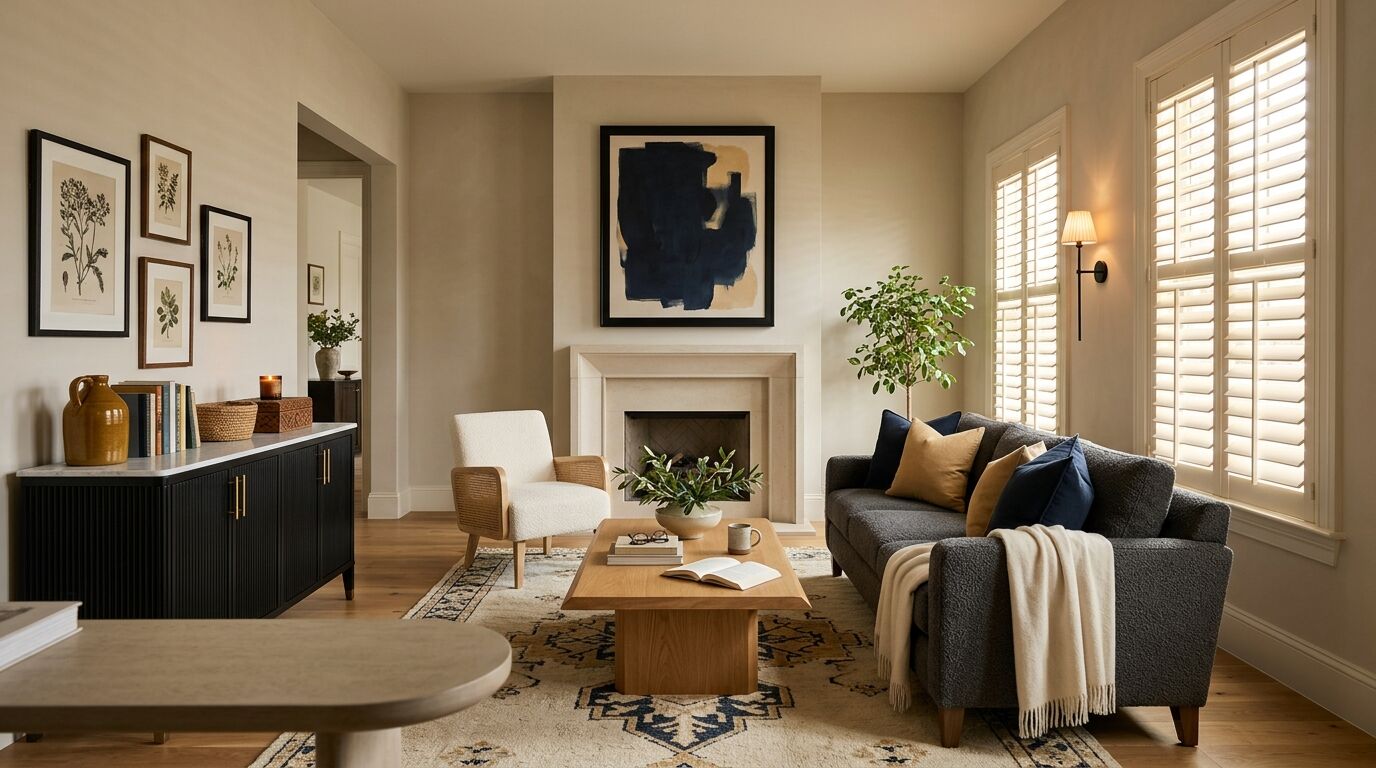
New construction hands you every window in the house bare on the same day. Twenty five openings, thirty, sometimes more, and each one needs a decision before the first bright morning makes the great room hard to sit in. Some homeowners order every room at once. Others spread it across several phases as the budget allows. Both work, but the order you pick inside that plan matters as much as how fast you move.
- Lead times differ by product. Blinds and shades typically take two to three weeks from order to installation. Plantation shutters typically take six to eight weeks, sometimes longer in a busy season.
- If you're phasing the house, place the order for the slowest product first, even for a room you plan to finish last. Otherwise that room ends up waiting the longest by accident instead of by choice.
- Cover privacy first: rooms the street sees and rooms you sit in every day, starting with the primary bedroom, the kitchen and the great room.
- Guest rooms, a home office used a few hours a week, and closets can wait for a later phase without costing you anything.
- One free in-home consultation can measure and quote the entire house up front, even when you plan to place the order in stages.
Lead Times Should Set the Order, Not Just the Budget
Most homeowners plan a phased order around money: cover the rooms you can afford now, and come back for the rest later. That is a reasonable way to budget, but it skips over something that has nothing to do with cost. Different products take different amounts of time to arrive, and the gap between them is bigger than most people expect.
Blinds and shades typically arrive in about two to three weeks from order to installation. Custom plantation shutters typically run six to eight weeks, and some manufacturers stretch toward twelve weeks in a busy season. Drapery varies too much to state a range at all, so get a firm date at your consultation before you count on it for a specific phase. If a shutter order and a shade order go in on the same day, the shades are already hanging while the shutters are still in production.
That gap should shape the order you place, not just the order you install. If a room in your plan is getting shutters, put that order in early, even if you do not intend to finish the room until a later phase. The alternative is deciding on shutters last, after the budget for the rest of the house is already spent, and then discovering the room you cared about most is also the one that takes the longest to finish.
Cover What the Street Sees and Where You Actually Live First
Once the lead time question is settled, the next one is which rooms actually go first. Two things decide it: privacy, and how much time you spend in the room.
Privacy points to the front of the house. Formal living rooms, a home office near the entry, and any room facing the street are the ones neighbors and anyone walking by can see into every evening. In a neighborhood with an HOA, a bare front window can also be the one that draws a letter about uniformity, which is its own reason to get it covered early.
Daily use points to the rooms you are actually in. For most families in a two story North Texas build, that means the kitchen, the breakfast nook and the great room, plus the primary bedroom. These rooms also tend to carry the tallest glass and the worst west facing sun, so covering them early does double duty: privacy now, and real relief from heat and glare while the rest of the house waits its turn. A nursery is worth moving up the list too, since cordless and motorized options remove the dangling cords that are a real safety concern around young children.
Secondary bedrooms, a home office used a few hours a week, and guest rooms can wait. Nobody outside the family sees into them regularly, and an empty guest room with bare glass costs you nothing while it sits unused most of the year.
A Practical Phase Order for a Typical New Build
Put together, a sensible order for a typical new construction house looks something like this.
- Phase one: place the shutter order for the primary bedroom and any formal, street-facing rooms right away, since that order takes the longest to fill and privacy there matters most.
- Phase two: order blinds or shades for the kitchen, breakfast nook and great room. They arrive fast enough that this phase often finishes close to the same time as phase one, even though it started later.
- Phase three: cover secondary bedrooms and the home office, starting with whichever room gets the worst afternoon sun.
- Phase four: guest rooms, closets and rarely used spaces, whenever the budget allows.
The exact order shifts from house to house. A family expecting a baby might move a nursery into phase one for cordless safety reasons, or a couple who works from home most days might push the office ahead of a guest room nobody has slept in yet. The sequence above is a starting point, not a rule.
One Measure Can Cover Every Phase
None of this requires more than one visit. A free in-home consultation measures every window in the house at once, whatever order you end up ordering in. You walk away with a full plan and a price for each room, and you decide later how to split it into phases as money allows.
Measuring the whole house up front also keeps colors and hardware finishes consistent across phases. Shutters ordered this spring and shades ordered next winter should still read as one decision made on day one, not two different projects that happen to share a house. Our guide to timing that first measure against your build schedule covers when to book the visit if the house is not finished yet.
Whichever order you choose, the same rule applies to every phase: decide with the whole house in mind, even when you are only ordering one room of it.
See it in your own light.
Every room measures differently. Sheila comes to your home, looks at your actual windows and light, and helps you choose what fits. No showroom pressure, no obligation.
Book a free consultationProduct options, pricing and lead times vary by manufacturer and by window. Details here are general guidance — your in-home consultation is where we confirm what actually fits your home.