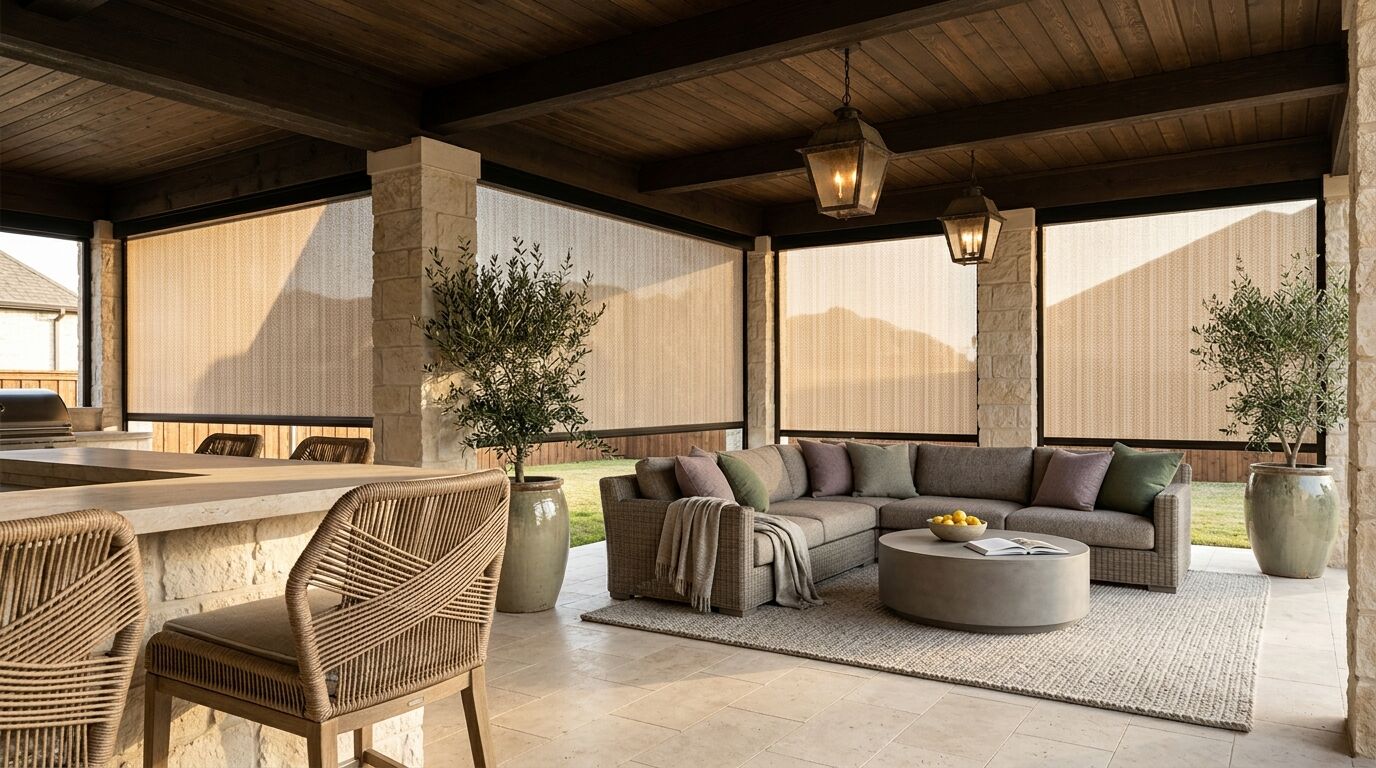
A motorized patio screen is a real investment, and the question homeowners ask most once the install is finished has nothing to do with color or fabric choice. It comes down to one thing: how long is this going to last?
The honest answer depends less on the brand behind the screen and more on three things: the fabric it's built from, the track it runs in, and whether anyone ever cleans it. Here's what actually wears first, what a cleaning routine that works looks like, and when a repair makes more sense than starting over.
- Sun is what actually ages a screen, not time on its own. Fabric that sits in full west or south sun for years fades and stiffens faster than fabric on a shaded, north-facing bay.
- Track-guided and magnet-track systems hold their tension for years with little attention. Cable-tensioned and zipper edges do the same job for less money and need more attention as they age.
- Mesh screens outlast solid vinyl on the same patio here, because vinyl catches more wind load and holds more heat against the fabric.
- Grit works into the track before it ever touches the fabric. A quick brush along the channel does more for the lifespan than any fabric cleaner.
- Retract the screen before real storms, even on a system rated for high wind. A wind rating covers the screen while it's doing its job, not sitting fully extended through a gust that's already moving patio furniture.
- Plan on one thorough cleaning each spring and fall. Everything in between is just a rinse.
- A torn panel or a screen running out of alignment is usually a repair, not a full replacement, even on a system we didn't originally install.
What Actually Wears a Screen Out
Every outdoor screen faces the same three things: ultraviolet light, wind, and whatever blows into the track. UV is the steady one. Screen fabric is treated to resist it, but years of full sun still show up as fading first, then a fabric that feels stiffer than it did new. A north or east-facing bay that only gets soft morning light will outlast a west-facing bay taking the full afternoon, on the exact same product.
Wind works differently. A screen engineered for high wind is built to flex and re-seat in its track under load. That's a real feature, and it's the reason certified systems cost more than the alternative. What actually shortens the life of a screen is what happens beyond the rating: hail, wind-blown debris, or a screen left extended through weather it was never designed to sit through.
Grit is the quiet one. Pollen, cottonwood fluff and construction dust from a still-growing neighborhood all settle into the track before they ever reach the fabric. Left alone, that grit works like sandpaper every time the screen moves, and it's the single most preventable cause of early wear. For more on how mesh and solid vinyl hold up differently against all three, see choosing outdoor shade fabric.
The Track Matters More Than the Fabric
Ask what actually fails on an outdoor screen, and the answer is almost never the fabric itself. It's the edge, the point where the fabric meets the frame and has to stay under tension for years in the weather.
Track-retained systems hold the fabric edge inside a channel, either with a bead locked into an aluminum groove or a magnetic closure that lets the track flex under a gust and snap back into place. Either way, the fabric stays in contact with the frame instead of relying on tension alone, which is what makes these systems hold up in real Texas wind.
Cable-guided and zipper systems cost less to install and do the job fine in calmer spots. Cable tension can loosen over a season or two, letting the fabric bow or gap at the edge. Zipper systems rely on friction between the fabric and the track, and that friction wears with every cycle. Neither is a bad choice on a sheltered patio. On an exposed one that catches wind off open ground, the track-guided version earns its price difference.
We covered how these systems hold up under wind load in why track-guided outdoor screens hold up in Texas wind. The short version here: check the track once a year for play or looseness, and if a cable system starts sagging at the bottom rail, that's a tensioning adjustment, not a sign the screen is failing.
A Cleaning Routine That Actually Works
Skip the pressure washer. It forces water past seals that are only built to shed rain, and it can push grit deeper into the track instead of out of it.
Rinse the fabric with a garden hose every month or two, more often during oak pollen season. That alone keeps most screens looking clean. Twice a year, once in spring and once in fall, give the fabric a real wash: a soft brush, a bucket of water with a small amount of mild dish soap, then a full rinse. Work top to bottom so dirty water runs off the bottom rail instead of down through fabric you already cleaned.
While the screen is down, run a soft brush along the inside of the track to clear out grit, dead insects and the fine dust that settles on any exterior surface here. A motor draws more current when it has to fight debris in the track, and that extra strain shortens a motor's life faster than age does on its own. If the screen runs on battery power, check the panel and the battery contacts for dust at the same time. We compared the two power options in battery or hardwired motorized shades.
Signs It's Time to Call Someone
A screen running a little slower on a cold morning is normal. A few things are not.
- The fabric stops fully retracting or extending, or stalls partway with the motor still running.
- One side of the screen runs ahead of the other, so the bottom rail comes down at an angle.
- The fabric bows or gaps out of the track under a light breeze.
- The material feels stiff or brittle, or shows a crease that won't relax after being rolled up for a while.
Any one of those is worth a call before it turns into a torn panel or a motor working too hard for too long.
Repair Comes Before Replace
Most of what goes wrong on an outdoor screen is fixable. A torn panel usually means replacing the fabric, not the whole system. A screen running out of alignment is almost always a track adjustment. Even the motor, when it does fail, is often a component swap rather than a full teardown.
We'll make every reasonable effort to repair a screen even if it wasn't one we originally installed, and if a part actually can't be repaired, we'll match a replacement as closely as we can. If you're not sure whether what you're seeing is normal wear or something worth a look, that's exactly what the outdoor roller shades page and a quick call are for.
If you're deciding on a new outdoor screen system rather than maintaining one you already own, Sheila's free in-home consultation is where that conversation starts. She'll walk your actual patio, in your actual sun and wind exposure, before recommending anything. Reach out here to set one up.
See it in your own light.
Every room measures differently. Sheila comes to your home, looks at your actual windows and light, and helps you choose what fits. No showroom pressure, no obligation.
Book a free consultationProduct options, pricing and lead times vary by manufacturer and by window. Details here are general guidance — your in-home consultation is where we confirm what actually fits your home.