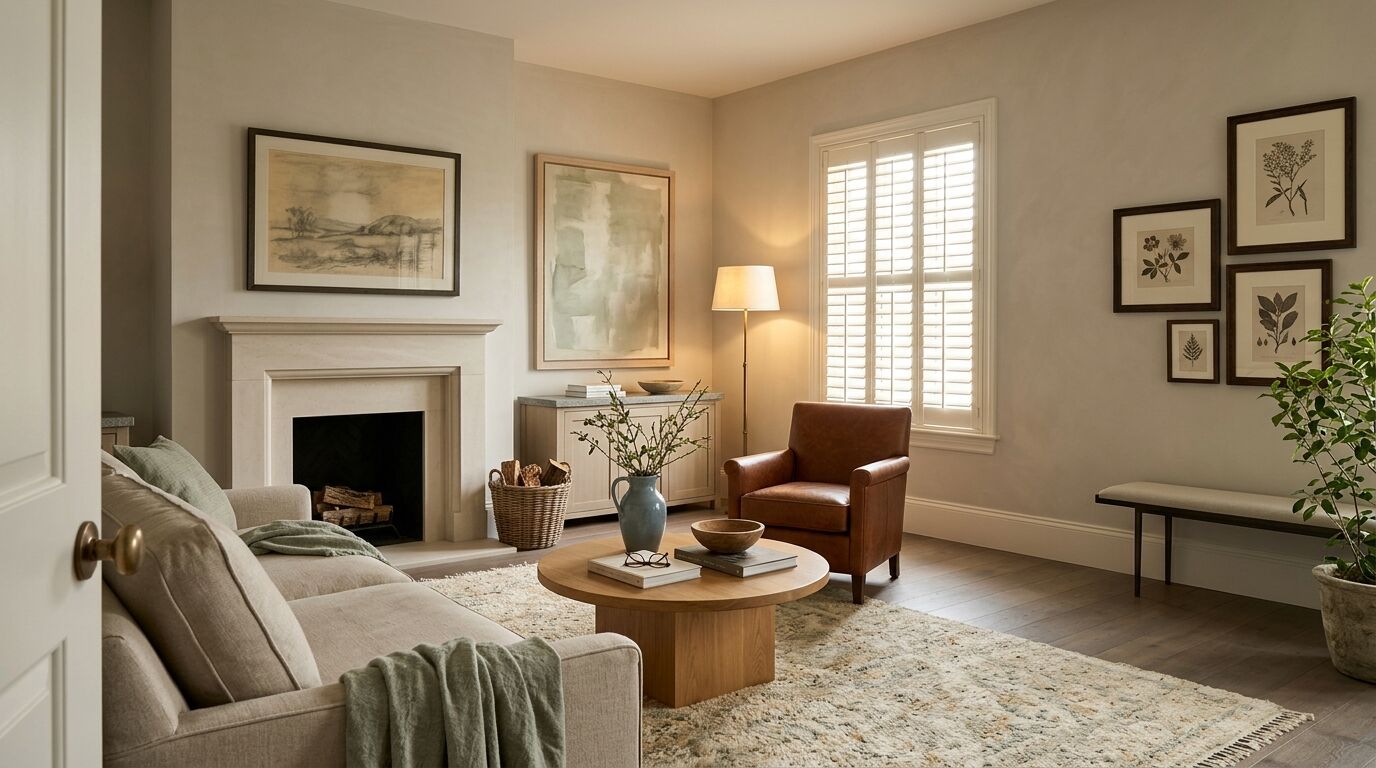
Scroll through national trend lists and you'll find the same thing every year: linen, layers, a little more texture. Some of it applies to a new build in Frisco or Prosper. Some of it ignores the fact that your living room faces west and gets hit with afternoon glare from a wall of glass. Here's what actually suits a North Texas new build right now.
- Natural texture, like linen-look and woven fabrics, is everywhere, and it works best when the fabric still controls the light.
- Slim, quiet shades are replacing heavy valances, especially on big modern windows.
- Layering sheer, shade and drapery is popular, and it fits tall Texas glass well.
- Motorization has moved from luxury extra to ordinary choice on high windows.
- Shutters are staying, with cleaner frames and a more deliberate choice of where to use them.
Texture Is In, but Glare Still Has to Be Handled
Designers keep pointing to natural fabrics: linen, cotton, woven grasses and reed. That look suits a new build, where the architecture is clean and the walls are mostly plain. A textured shade adds warmth without adding fuss.
The catch here is the sun. A loosely woven natural shade looks lovely and lets a lot of light through. On a west-facing wall at four in the afternoon, that may be more than you want. Many natural-look fabrics come with a liner or a tighter weave that keeps the texture and cuts the glare. If you like the look, ask what the fabric does with direct sun, not just how it photographs. Our post on west-facing windows in North Texas goes into that in more detail.
Slim and Quiet Is Replacing Heavy and Fussy
Swags, stiff valances and bulky headings are fading. What's replacing them is simple: roller shades with a slim cassette, cellular shades that nearly disappear when raised, and flat or softly folded Roman shades. They sit close to the window and leave the architecture alone.
That matters in new homes with large, plain windows. The glass is the feature, and the covering should frame it, not compete with it. When the shade is up, you want to see the view and not a stack of fabric.
Layering Fits Tall Windows Well
Layering is one of the most repeated ideas in current design coverage, and it makes practical sense here. A shade handles light and privacy. Drapery softens the edges, adds height and deals with echo in a big room. Sheers can take the edge off the glare while keeping the view.
Two-story great rooms are where this earns its keep. A single shade on a very tall window can look thin. Drapery hung high and wide gives the wall some presence. If you want to see how the pieces fit together, read our guide to layering drapery over shades.
Motorization Is Now a Normal Request
Motorized shades used to be a luxury add-on. Now they're a common ask, mostly because of the windows. If a shade is fifteen feet up, nobody wants to find a ladder. Battery-powered motors mean many retrofits need no electrician, and control by remote, app or voice makes the daily routine easy.
The same motors remove dangling cords, which is the safe choice around small children and pets. If you're weighing it up, start with the windows you can't reach and the ones that take the most sun.
Shutters Are Staying, With Better Judgment
Some trend lists tell you to skip shutters. We don't agree, but there's a fair point inside the advice: shutters everywhere in a house isn't always the best answer. A smart approach is to choose them where they do the most work, like street-facing windows, bedrooms and bathrooms, and pair them with shades or drapery in the main living areas.
The frame itself has changed too. Modern and transitional interiors tend to want a cleaner frame and narrower or more precise louvers, with the color matched carefully to the trim. Browse our custom shades and compare them with shutters before you decide room by room.
Color Is Quieter Than You'd Expect
Stark white is giving way to warmer whites, oatmeal, greige and soft stone. Coverings tend to stay neutral because they're a long-term purchase, and the color arrives in the art, the rug and the cushions. That's easier to change than a custom shade.
What to Take From All This
A trend is only worth following if it works in your room. In a North Texas new build, that means choosing for glare, for height and for how the house looks from the street, then picking the look you like within those limits.
If you'd like help sorting that out, Sheila will measure your actual windows in your actual light and talk through what suits each room. You can see finished rooms in our project gallery, then book a free in-home consultation with no obligation. Product options, pricing and lead times vary by window, and they're confirmed when you order.
See it in your own light.
Every room measures differently. Sheila comes to your home, looks at your actual windows and light, and helps you choose what fits. No showroom pressure, no obligation.
Book a free consultationProduct options, pricing and lead times vary by manufacturer and by window. Details here are general guidance — your in-home consultation is where we confirm what actually fits your home.